
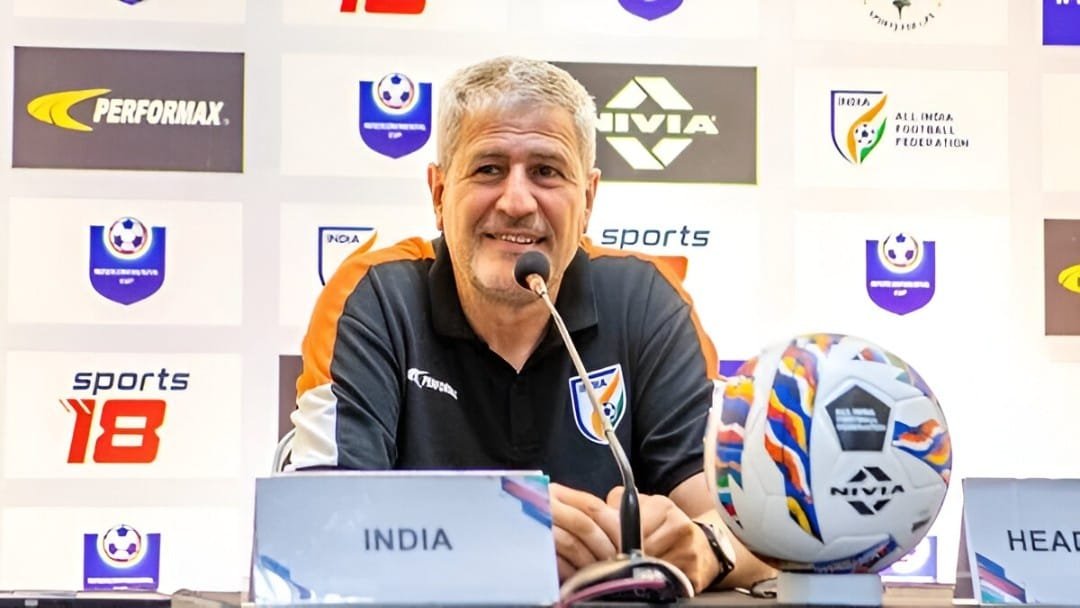
In the end, the numbers told a story India couldn’t ignore. One win in eight games. Five goalless outings. A national team that looked increasingly toothless. And so, just over a year after his appointment, Manolo Márquez resigned as India’s head coach — a decision confirmed by the All India Football Federation (AIFF) on July 2.
The departure, described as “mutual” by the federation, was inevitable. It marked the latest chapter in Indian football’s recurring challenge: balancing ambition with coherence.
A Dual Job, A Split Focus
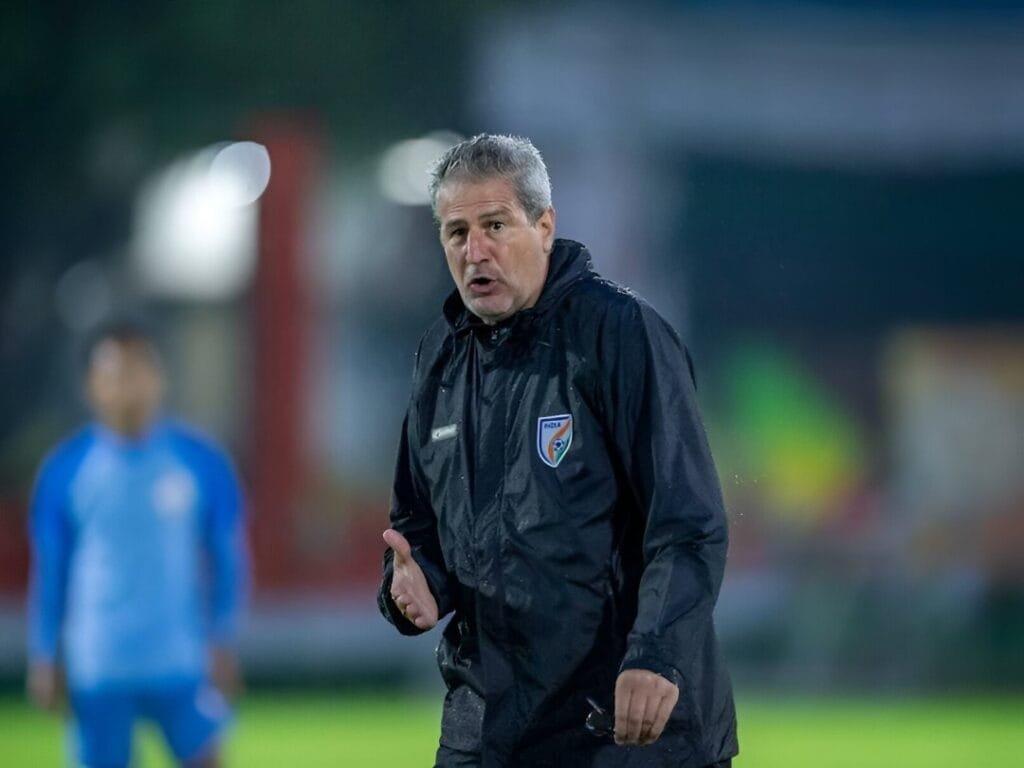
When Márquez took the job in June 2024, there was hope — and concern. The Spaniard had made his mark in the Indian Super League with Hyderabad FC, later joining FC Goa. But his national team appointment came with strings: he’d continue as Goa’s coach while managing the national side.
At a time when India needed singular focus, Márquez was juggling responsibilities. For a country still building its footballing identity, the optics weren’t great. Nor were the results.
India under Márquez lacked direction. Their only win came in a friendly against the Maldives — a 3–0 result that, in hindsight, did little to paper over deeper cracks. Against stronger opposition, India looked out of ideas. Their attack lacked bite. Their midfield often disconnected. The defense, while steady, wasn’t enough to salvage points.
Hong Kong Defeat: The Final Straw
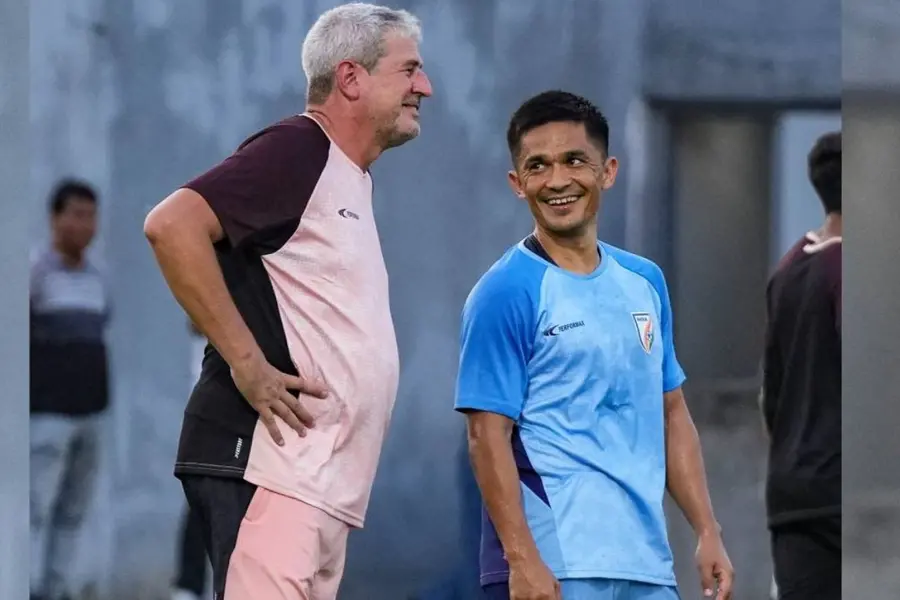
The 1–0 loss to Hong Kong in June during the AFC Asian Cup qualifiers wasn’t just another poor result. It was a moment of reckoning.
India sat at the bottom of their qualifying group with one point from two games. Their hopes of reaching the 2027 AFC Asian Cup — already slim — were hanging by a thread. Inside the AIFF, patience was running thin.
By the end of the month, the federation’s Technical Committee, headed by IM Vijayan, formally recommended a change. Márquez, for his part, had reportedly sensed the writing on the wall. Talks between both parties moved quickly. There was no payout. No drama. Just a quiet end to a stint that had lost its momentum.
What Comes Next: Sanjoy Sen and the Urgency of Now
The timing of Márquez’s exit raises immediate questions — and urgency. India face Singapore in back-to-back qualifiers this October. Whoever takes charge next will have limited time, a fractured squad, and enormous expectations.
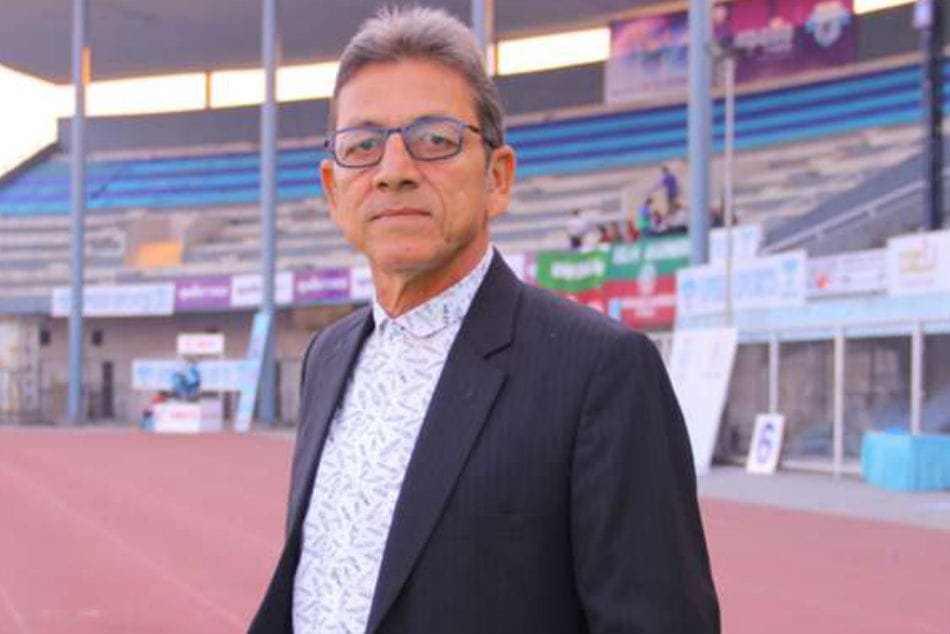
Early whispers inside the AIFF point toward Sanjoy Sen as a leading contender. A seasoned Indian coach who guided Mohun Bagan to an I-League title, Sen now serves as the AIFF’s Technical Director for Grassroots and Development. He knows the system. He knows the players. Most importantly, he understands the limitations and potential of Indian football.
Whether the AIFF turns to Sen or looks abroad again, the brief is clear: rebuild belief, restore structure, and — above all — find goals.
Lessons in Misalignment
If there’s a lesson in Márquez’s short tenure, it’s this: good coaches need good setups. India’s football ecosystem — still fragile in many ways — wasn’t prepared for a split-role experiment. Márquez, a tactician with clear ideas, simply didn’t have the bandwidth to translate vision into results across two demanding roles.
In another world, with better planning, perhaps it would have worked. In this one, it didn’t.
A Reset, Not a Rupture
There is, still, reason for optimism. India has a crop of talented youngsters coming through. The domestic game is evolving, slowly but surely. And the hunger — from fans, players, and stakeholders — is real.
The resignation of Manolo Márquez as India coach is not just the end of a disappointing chapter. It’s a reminder that in international football, clarity of purpose matters as much as coaching pedigree. The next appointment must be about fit, not just flair. Because for Indian football, the window is still open. But not forever.