

The Indian football crisis has reached a decisive tipping point. Just a decade after the Indian Super League (ISL) was launched amid fanfare and high hopes, the future of both the league and the national team appears uncertain. With the upcoming ISL season still without a start date, unresolved disputes in football governance, and the Blue Tigers slipping in FIFA rankings, Indian football stands at its most fragile moment. What began as a bold vision now risks fading into yet another chapter of missed opportunities and administrative chaos.
ISL Calendar Crisis: Uncertainty Grips the League
The Indian football crisis came into sharp focus in May 2025. The All India Football Federation (AIFF) released its competition calendar, but the Indian Super League (ISL) was conspicuously missing. For many, this omission sounded alarm bells, casting a long shadow over the future of India’s premier football league.
At the heart of the uncertainty lies the unresolved Master Rights Agreement. This commercial backbone of the ISL remains in limbo. With negotiations at a standstill, club owners and players find themselves without answers.
“Without clarity, preparations for the new season are impossible. Players and staff are anxious, and plans are on hold,” admitted one ISL club official, capturing the restless mood behind the scenes.
To add to the turmoil, the Supreme Court’s ongoing review of the AIFF constitution has put a freeze on major decisions. The result is a deepening sense of confusion and unease within Indian football administration—a crisis that now threatens to stall the progress of the entire sport.
Promotion and Relegation Delayed: A Stagnant League
Another glaring aspect of the Indian football crisis lies in the stalled journey towards a genuine promotion and relegation system. Although Punjab FC and Mohammedan Sporting have recently earned their places in the ISL through on-field merit, the dream of a truly open league remains distant.
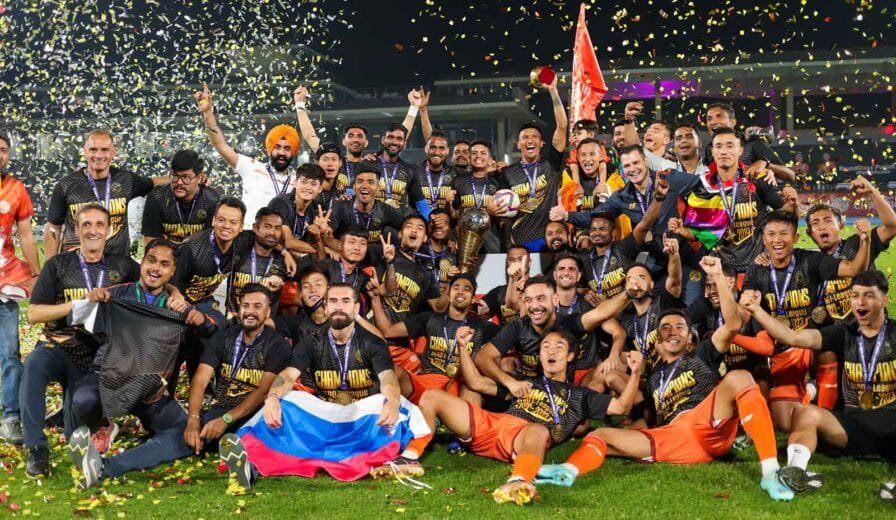
Fresh proposals aim to postpone relegation from the ISL for as long as a decade. This move stands in stark contrast to Asian Football Confederation guidelines and risks draining the league of its competitive intensity.
For players and fans alike, this absence of jeopardy casts a long shadow.
“A league without relegation lacks real competition. For Indian football to grow, every club must have something to fight for,” observes former India captain Renedy Singh.
His words echo the growing sentiment that without the pressure of survival and the reward of promotion, Indian football risks stagnation at the highest level.
National Team’s Struggles Deepen the Crisis
The Indian football crisis has become all the more visible on the international stage. The national team continues to struggle for form. Since July 2023, India has registered just a single win in sixteen outings, falling to 127th in the FIFA rankings—a position that has sparked widespread debate about the health of the game.
Much of the blame falls on the shortage of competitive, high-quality matches for Indian players. The ISL season remains short by global standards. As a result, footballers often lack the sustained game time needed to develop sharpness and tactical discipline.
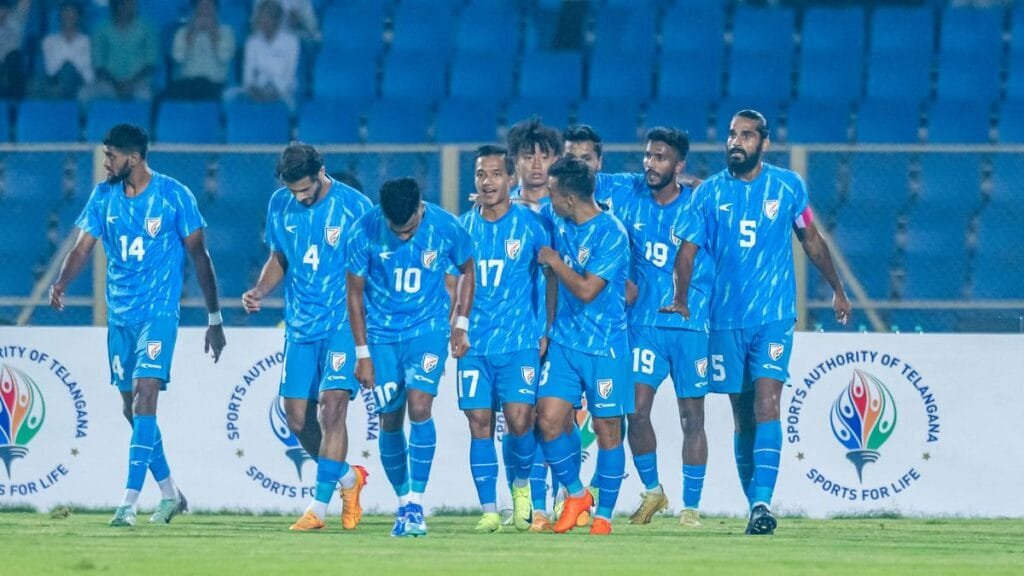
Yet amid these struggles, a glimmer of hope emerged in March 2025. Sunil Chhetri, India’s iconic captain and record goal-scorer, reversed his retirement and rejoined the national team for the AFC Asian Cup qualifiers. His return has injected much-needed leadership and belief into a squad searching for direction.
A former national coach observed, “India’s football talent needs a strong domestic structure to thrive. Without more matches and proper youth development, results will not improve.”
As Chhetri’s comeback offers inspiration, it also highlights the urgent need for broader reforms in Indian football’s foundation.
Youth Development: A Weak Link in Indian Football
A critical factor underpinning the Indian football crisis is the ongoing weakness in the country’s youth development structure. The U-17 Youth League has expanded to more than 70 academies. The Reliance Foundation Development League has increased its fixture list. Still, the system lacks a full-fledged, year-round U-21 or reserve league.
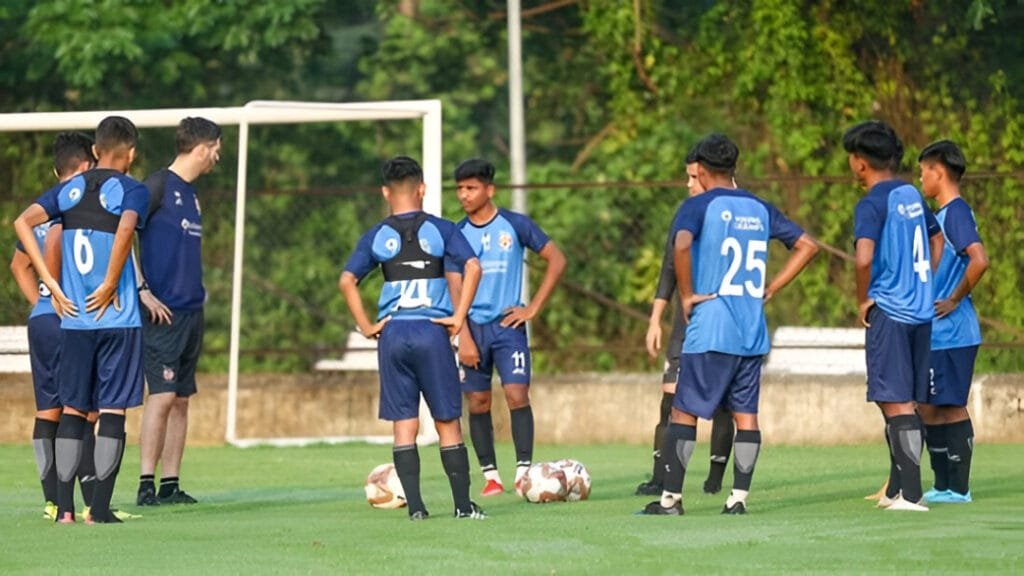
This structural gap continues to hinder the transition of promising youngsters to senior professional football. In comparison, nations like Japan and South Korea have built seamless youth pathways. These systems allow players to gain vital match experience and develop steadily before breaking into top-tier sides.
The absence of such continuity in India often sees talented players fade away after their teenage years, their potential left unfulfilled.
As one academy director in Bengaluru pointed out, “Many young players disappear after U-18 because there are not enough opportunities. Indian football needs a clear path from youth to professional level.”
Unless this missing link is addressed. the pipeline to the senior game will remain thin prolonging the Indian football crisis and holding back the nation’s ambitions on the Asian stage.
Governance Issues: Leadership Disputes Erode Trust
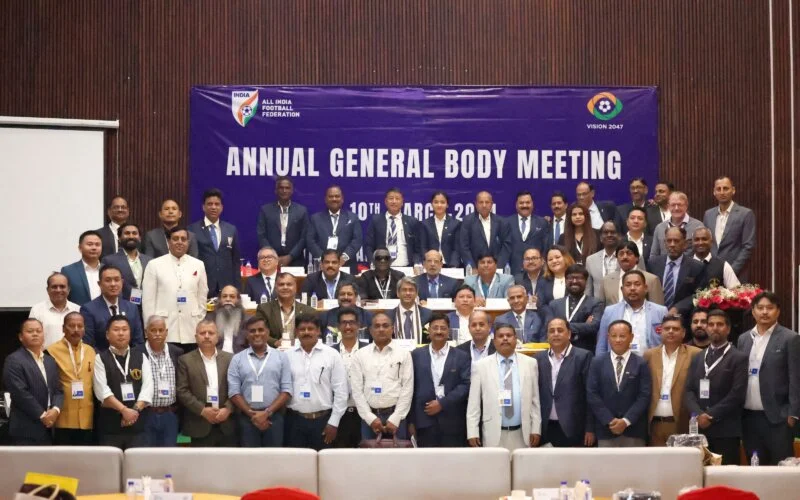
Leadership disputes have deepened the Indian football crisis, casting a long shadow over the sport’s administration. Recent months have seen AIFF president Kalyan Chaubey and legendary former players such as Bhaichung Bhutia trading public barbs over the federation’s direction and management. These disagreements have spilled into the media, exposing rifts at the very top of Indian football.
Compounding the turmoil is the unresolved Master Rights Agreement, the commercial lifeline of the ISL, and the ongoing scrutiny from the Supreme Court into the AIFF’s functioning. This climate of uncertainty has unsettled sponsors and stakeholders alike. It undermines confidence in the game’s future and leaves the entire football ecosystem anxious for stability and clear leadership.
Fan Support Endures, But For How Long?
Despite the persistent Indian football crisis, the game’s heartbeat still resonates in the stands of Kolkata and Kochi. Clubs like Mohun Bagan SG and Kerala Blasters continue to draw some of the most passionate crowds in Asia, transforming home matches into vibrant spectacles of colour and sound. These loyal supporters remain a testament to football’s enduring cultural pull in India.
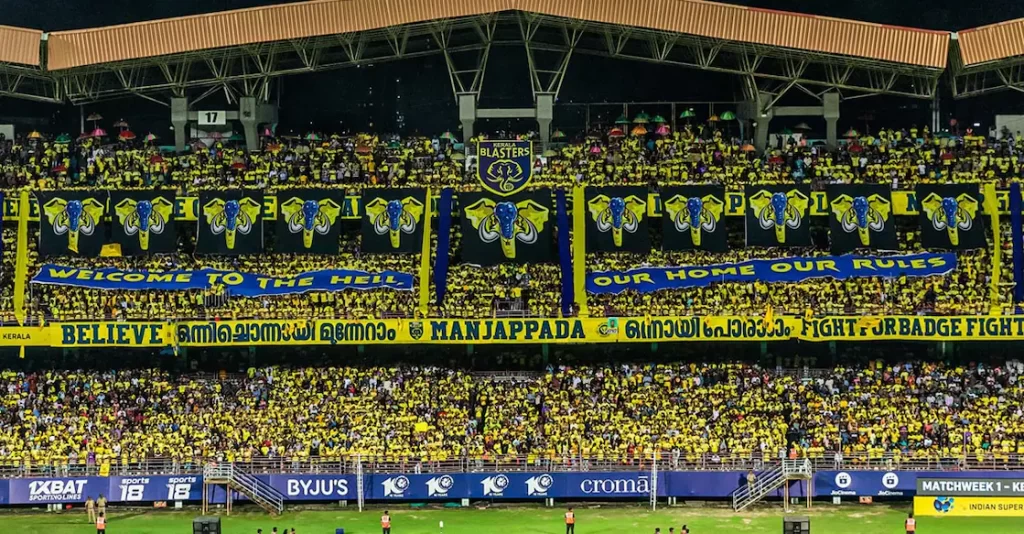
Yet, beneath this surface of enthusiasm, the warning signs are clear. Average attendance across the Indian Super League has now fallen below 12,000 spectators—a noticeable decline from the league’s early years. While the energy in traditional strongholds remains undiminished, this dip highlights the challenge of sustaining fan engagement nationwide. As uncertainties and structural issues cloud the sport’s future, Indian football must translate these pockets of passion into widespread, lasting support.
Rebuilding Indian Football: Roadmap Out of Crisis
Addressing the Indian football crisis demands more than just optimism—it calls for decisive, far-reaching reforms. Experts and stakeholders agree that the following steps are critical for a sustainable turnaround:
- Finalise the ISL Calendar and Master Rights Agreement: Bring clarity to the ISL’s future by resolving commercial negotiations and publishing a clear fixture list. This allows clubs, players, and fans to plan with confidence.
- Implement Promotion and Relegation by 2027: Opening up the league pyramid will inject competitive tension, reward ambition, and align Indian football with global best practices.
- Extend the Domestic Season: Expanding the number of matches will ensure players gain the game time and tactical experience needed to compete at higher levels.
- Establish a Year-Round U-21 and Reserve League: Creating a seamless pathway for youth development will prevent talented players from falling through the cracks and strengthen the foundation of the sport.
- Improve Transparency and Governance within the AIFF: Enhanced accountability, clearer communication, and a transparent decision-making process are vital to restore trust and attract new sponsors.
Industry leaders also advocate for an independent audit of AIFF operations and a well-defined financial structure. This step assures all stakeholders of the sport’s integrity. Only by embracing these reforms can Indian football move from crisis to renaissance and unlock its true potential on the Asian and global stage.
Conclusion: The Road Ahead for Indian Football
The Indian football crisis has laid bare the urgent need for lasting change. Though the ISL has put the sport in the national spotlight, visibility alone is not enough. Real progress now depends on fundamental reforms: building robust youth pathways, strengthening league structures, and restoring faith in governance.
The time for half-measures has passed. Only with bold, collective action can Indian football rise above its challenges and truly compete with Asia’s elite. The decisions made in the coming months will shape whether the nation’s footballing promise is finally fulfilled or lost to another generation. The future of Indian football hangs in the balance, waiting for vision to be matched by action.