
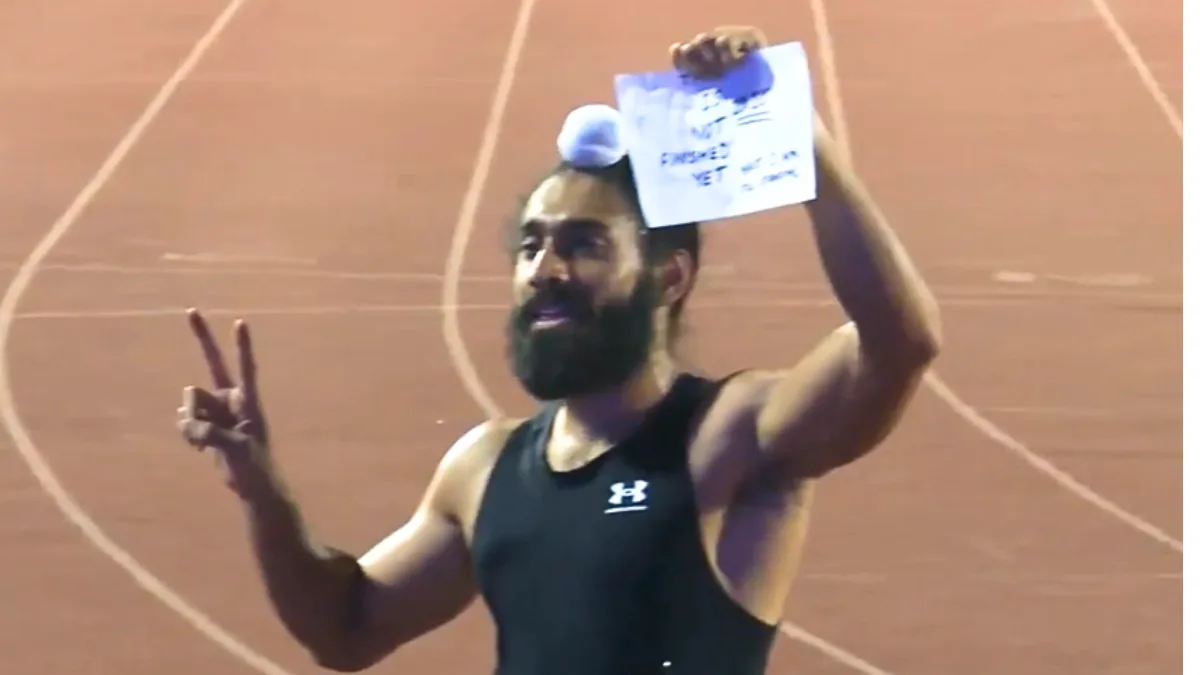
On a humid May evening in Ranchi, a Punjab sprinter did what no Indian had managed before. The clock stopped at 10.09 seconds. Indian athletics had a new benchmark, and Gurindervir Singh’s name on it.
How the 100m Record Fell at Birsa Munda Stadium
The final at Birsa Munda Stadium carried the air of a heavyweight bout. Animesh Kujur, the 22-year-old from Odisha, walked in as the freshly minted national record holder. He had clocked 10.15 the previous evening in the semifinals. That run reclaimed a mark Gurindervir had snatched from him just minutes earlier. Saturday’s final, though, belonged to the Punjab man. He charged out of the blocks and found top speed past the 50-metre mark. The clock read 10.09 seconds as he crossed the line. His winning margin was 0.11 over Animesh, who took silver in 10.20. Pranav Gurav, another Reliance Foundation athlete, picked up bronze in 10.29.
The 24-hour window that produced this final played out like serialised drama. On Friday, Gurindervir broke Animesh’s 2025 record of 10.18 in the first semi-final heat with a 10.17. Five minutes later, Animesh struck back. He returned a 10.15 in the second heat to reclaim his mark. Three national records fell inside a single competition. Indian sprinting has rarely witnessed such a sequence at this calibre, and rarely with so much at stake.
What Gurindervir Singh’s Sub-10.10s Means for Indian Sprinting
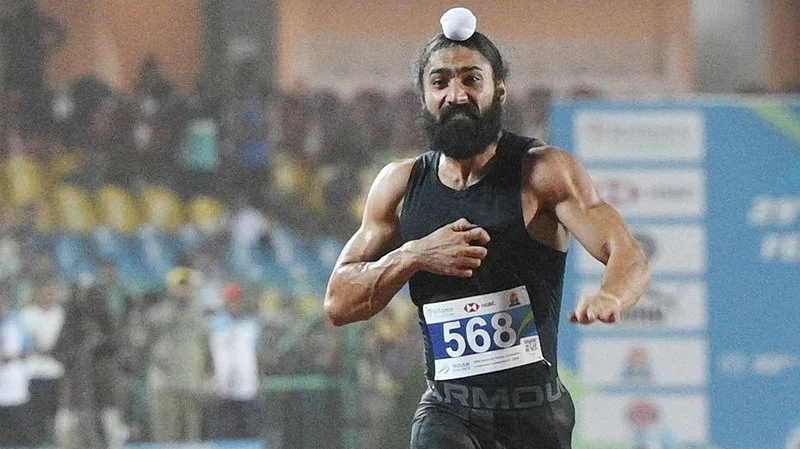
The numbers point to a shift, not merely a moment. Gurindervir’s 10.09 stands as the second-fastest 100m time in Asia this season. Only Japan’s Fukuto Komuro has gone quicker, with a 10.08 set in early May. The mark also clears the Athletics Federation of India’s qualifying standard of 10.16 for the 2026 Commonwealth Games in Glasgow. Both Gurindervir and Animesh have now booked their berths in that meet. Backing this climb is the Reliance Foundation High Performance Centre. Gurindervir trains there under coach James Hiller. Four of India’s top six 100m sprinters share that base. The Jalandhar-born athlete had spoken of a sub-10.10 effort after his March 2025 record of 10.20. That intent has now hardened into evidence.
The wider picture tells its own story. Minutes after Gurindervir’s run, Vishal Thennarasu Kayalvizhi became the first Indian to break the 45-second barrier in the 400m. His 44.98 stands as Asia’s fastest time this year. Two national records fell in one evening, at one stadium. The Federation Cup 2026 has joined the most consequential domestic meets in recent memory. Glasgow waits next. The 10-second barrier is now within touching distance. Indian sprinting has rare momentum. The harder question is whether that momentum can carry to a global final.