The unthinkable has happened. With the ISL 2025 season suspended, Indian football enters unfamiliar territory, a year without its top tier league for the first time in a decade. The Indian Super League, once celebrated as the turning point for the sport’s modern era, will not take place in 2025–26. Despite earlier reports suggesting a possible December start, the tender process to find a new commercial partner ended in silence. The process ended in silence, with not one formal bid submitted.
For a sport that has struggled to find stability and direction, the absence of its main competition marks a painful moment. Indian football, already dealing with limited funding and uncertain governance, now finds itself without a league at the very top.
The Tender That Found No Takers
In October, the All India Football Federation invited bids for the commercial rights of the Indian Super League. The process, managed by consultancy firm KPMG, was intended to select a partner to oversee broadcasting, sponsorship, and digital rights. Four interested parties showed initial intent, including Football Sports Development Limited, FanCode, Conscient Heritage Group, and a foreign consortium.
By the first week of November, however, all of them had stepped back. The terms of the proposal, according to people familiar with the discussions, lacked both financial flexibility and long term vision. The tender demanded a minimum annual guarantee of thirty seven and a half crore rupees or five percent of total revenue, whichever was higher. For investors already wary of Indian football’s uncertain commercial future, those numbers offered more risk than reward.
In response to feedback from potential bidders, the federation extended the bid submission deadline from November 5 to November 7, giving interested parties two additional days to finalise their offers. The federation announced the extension through official channels in a final attempt to keep the process alive. But when the new deadline passed at 5 p.m. on November 7, the tender box remained empty.
What began with cautious optimism ended with complete disengagement. Despite the involvement of established names and repeated revisions to the terms, not one organisation submitted a formal proposal. For the federation, which had viewed this tender as a fresh start, the outcome revealed just how fragile market confidence in Indian football has become.
A Process Marked by Confusion and Delay
In theory, the tender was meant to mark a new era of transparency and professionalism. In reality, it exposed the federation’s weaknesses in communication and planning. The federation delayed the tender several times and revised its terms repeatedly through five corrigenda. Several participants submitted queries seeking clarity on financial models, legal clauses, and league structure, but the answers did little to ease concerns.
Clubs, too, had lost patience. In July, ten of them wrote a joint letter to the federation expressing frustration at the delays, calling it a breach of trust. With the existing agreement expiring in December, the uncertainty had already forced Football Sports Development Limited to halt preparations for the upcoming season. Player contracts were frozen, sponsorship talks stalled, and broadcast partners stepped back to wait for clarity that never came.
The Fallout of a Failed Deal
The collapse of the tender means Indian football now faces a season without its premier competition. The ISL 2025 season suspended outcome highlights how fragile the ecosystem has become, exposing the financial and operational dependence on a single league. The I League, which once served as the nation’s top tier, may temporarily fill the space, but it lacks the commercial pull and television presence of the Indian Super League.
The financial impact is severe. The federation’s annual income, which heavily depended on the fifty crore rupees it received from its commercial partner, will take a significant hit. That money funded referee development, youth academies, and administrative operations. Without it, routine functions could be disrupted.
For players, coaches, and staff, the consequences are immediate. Several contracts and sponsorship deals were aligned with the league’s season cycle. With no tournament this year, hundreds of professionals across clubs and service providers are left in uncertainty.
Why the System Failed
The fall of the Indian Super League tender is not an isolated misstep but a symptom of a deeper problem. Indian football has long struggled to balance glamour with grounded planning. The league, born in 2014 with celebrity owners and corporate backing, offered promise but carried structural fragility from the start.
Football Sports Development Limited is believed to have lost nearly five thousand crore rupees since the league’s inception. The financial strain on clubs, coupled with declining television ratings and inconsistent national team performances, eroded confidence in the system. When the federation sought a new commercial partner, those realities could no longer be ignored.
By insisting on guaranteed payments rather than performance based growth, the tender failed to attract investors who preferred flexibility in a volatile market. The absence of a clear long term roadmap for club profitability, youth pathways, or league expansion further weakened the proposal’s appeal.
What It Means for the Future
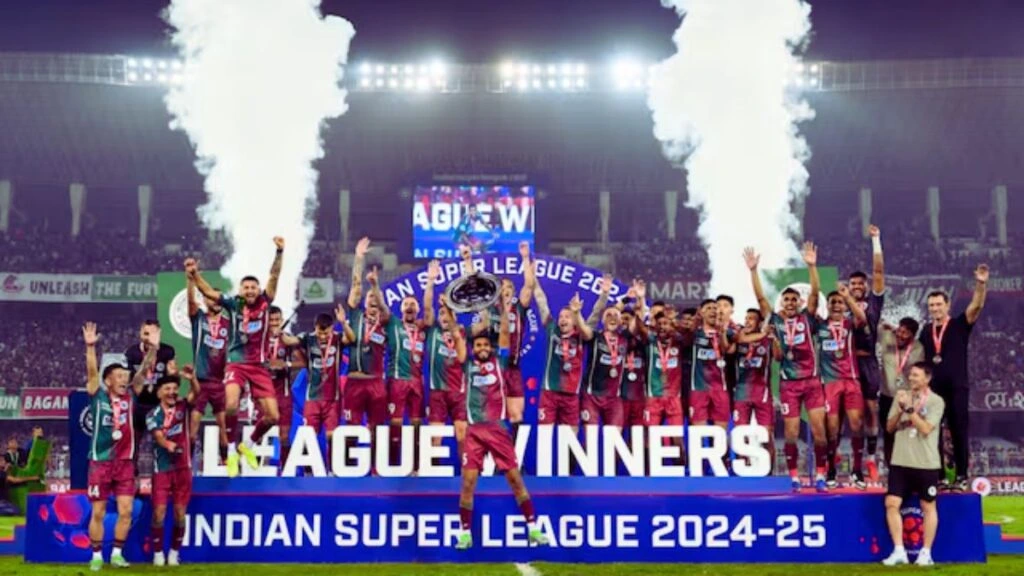
The ISL 2025 season suspended scenario is not just a scheduling setback; it signals a deeper crisis of credibility within Indian football. The federation must now rethink how it manages the game’s commercial and structural direction. With the national team still searching for consistency and the domestic system lacking clear coordination, the loss of its flagship competition threatens to undo whatever progress Indian football has made in recent years.
This is a critical warning sign. The sport can no longer rely on quick fixes or glossy marketing campaigns. Sustainable growth demands financial realism, accountability, and genuine investment in grassroots systems.
The coming months will determine how the federation responds. Talks may reopen for a revised tender or a temporary stopgap, but the loss of trust among stakeholders will not be easy to rebuild. India now faces a football year without its top tier league, a reality few could have imagined until recently.
The task ahead is not to point fingers but to rediscover purpose and rebuild a project that once promised to transform Indian football but collapsed before it took shape.