
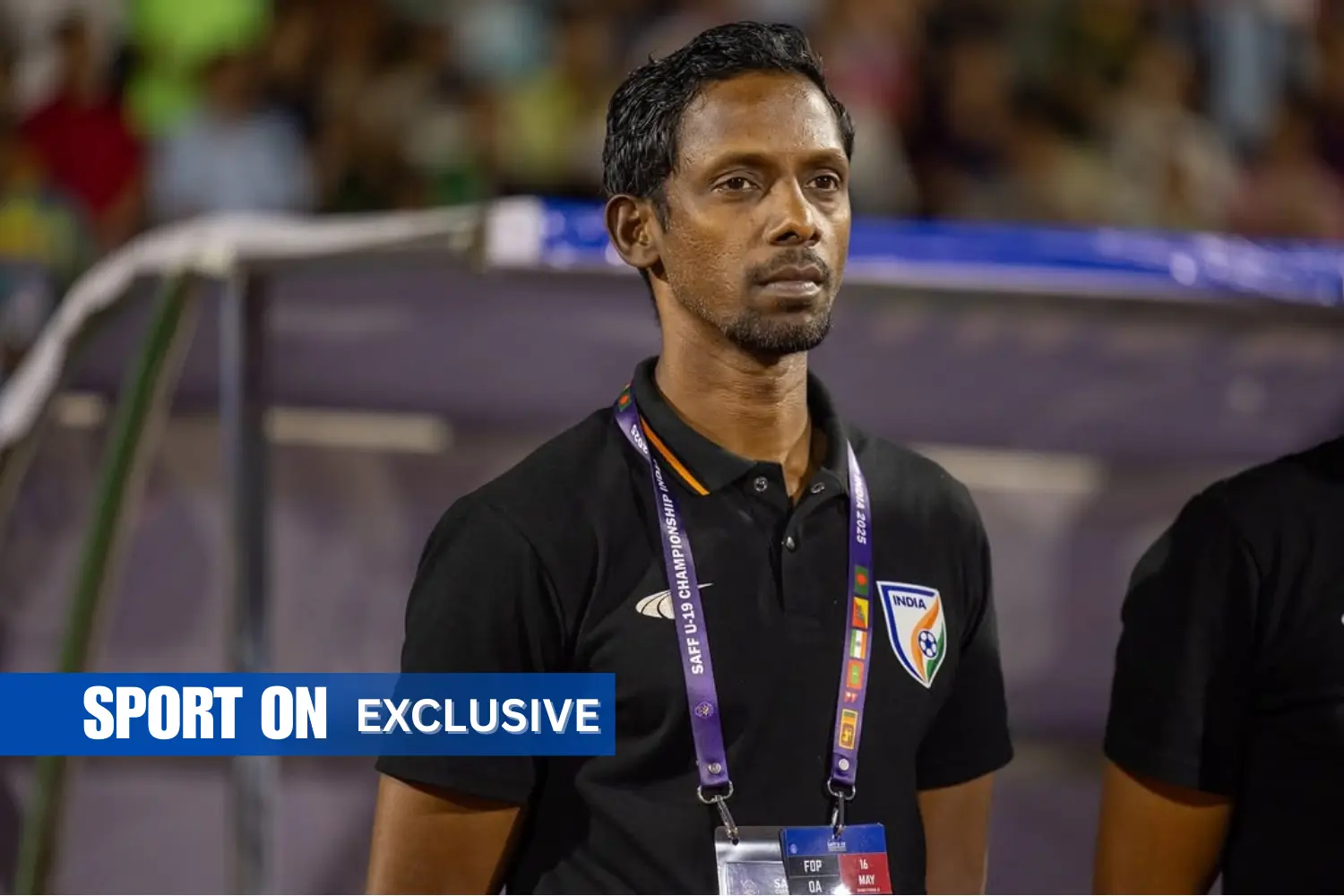
In this exclusive Bibiano Fernandes interview, India’s U-17 coach reflects on his journey from the fields of Goa to the national dugout. He offers rare insight into the philosophy, preparation, and belief system behind India’s youth resurgence. Speaking with candour, he breaks down the ideas shaping the next generation. He also explains the road that now leads toward the Asian Cup.
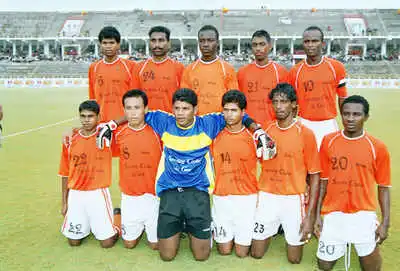
1) Can you take us back to your early days in Goa? How did growing up in a football-loving state like Goa shape your passion for the sport, and what was your journey like from playing professionally to transitioning into coaching?
I started playing football in my village, where many boys were already passionate about the game. They would always talk about football, especially the English Premier League, even though we did not have a TV. I would listen to their stories about Beckham and Manchester United. My brothers also talked about these clubs. They even built a small football ground, and we played there during the summer. That is where my love for football truly began.
Later, I was studying in a school that did not offer many sports activities. I told my brother that I wanted to join another school that regularly won the Subroto Cup. I insisted that I wanted to study there. In the eighth standard, I moved to St. Anthony’s School in Guirim. I was selected for the school team for the Under-16 Subroto Cup. In the first year, we lost the state finals, but in the second year, we won. I then represented St. Anthony’s School for the Subroto Cup at Delhi.
After the 10th standard, I attended the SAI (Sports Authority of India) selection trials. I got selected and stayed in the SAI hostel for two years. After SAI, I received an offer to play for a club in the Goa Pro League. The coach wanted me to sign for his club, and I even went for training while also being part of the National Games camp. However, I ultimately did not sign for that club. Instead, I signed with another one because, at that time, we were very young. We had no agents, and our parents did not fully understand the processes involved in pursuing a football career. We had to negotiate and manage everything on our own, which was very difficult. Many times, we did not even understand what papers we were signing.
So, that is how my career started. The first club I signed for was Churchill Brothers. Then I played for Dempo Sports Club. After that season, I joined Vasco Sports Club for two years. At Vasco, I became part of the starting eleven and played full seasons for both years. After that, I joined Pax of Nagoa and then Sporting Clube de Goa.
At Sporting Clube de Goa, I performed very well and played consistently. The club qualified for the I-League from the Second Division. We then played in the I-League, and I received a call-up to the National Camp first under Coach Sukhwinder Singh from Punjab (JCT coach), and later under Bob Horton.
After that, I signed for East Bengal for one season before returning to Goa. Towards the end of my career, I completed my AFC C License after a teammate encouraged me. Two years after that, I retired. Immediately after retiring, I received an opportunity to work with a professional club in Goa as a player-cum-coach.
Following this, I joined Sesa Football Academy for two years, where I trained the Under-14 and Under-15 age groups. During my time there, I completed my AFC B License. Around then, Scott and Rob Baan noticed my work and invited me to join the National Team setup for the Under-17 World Cup B Team. The AIFF had formed several academies in preparation for the U-17 World Cup, and I joined as the assistant coach under Sajid Sir.
That was the real beginning of my coaching career. After that, I became the head coach of the Under-15 national team for the first time. We participated in the SAFF Championship, won the tournament, and then qualified for the AFC Championship in 2018.
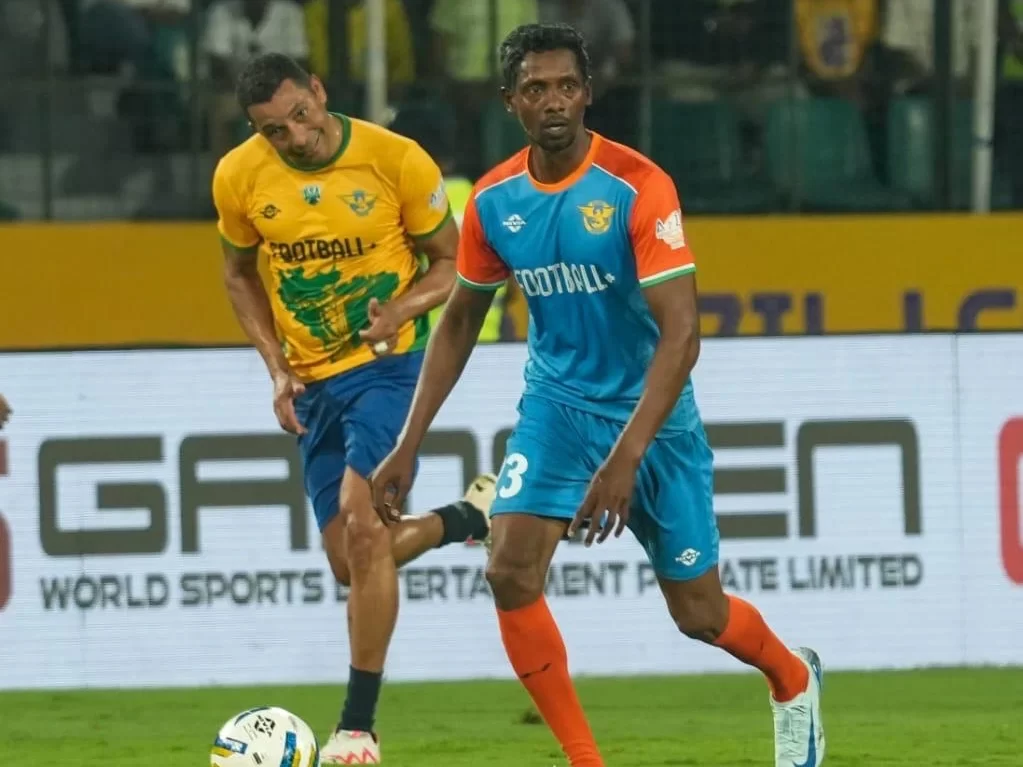
2) You had a brief stint with the senior Indian national team in 2005. Looking back, what key lessons from your playing career, whether triumphs or setbacks, do you carry into your role as a coach today?
Ah, yes. I didn’t have a very long stint with the national team. One thing that stayed in my mind, mainly because clubs had put it into our heads, was that playing for the national team had no real value. We were told that you would gain nothing from it, that club football was more important because that is where you were paid. But in reality, it is not like that. Playing for the national team is a matter of pride.
When I got selected, I was not as excited as I should have been because I had grown up believing that club football was more important, especially financially. We were also told that if you got injured with the national team, no one would look after you, whereas the club would. All these things influenced my thinking at the time, and because of that, I did not feel the excitement that a national call-up truly deserves.
But I was there, and I gained valuable experience. Initially, I did not make it into the first eighteen or twenty-three under Bob Horton. However, under Sukhwinder Singh, I represented the national team. We toured Pakistan, and later, under Bob Horton, the team travelled to Canada for exposure matches. After that, we played the World Cup qualifiers. Although my time with the team was short, it was a great experience, and I learned a lot.
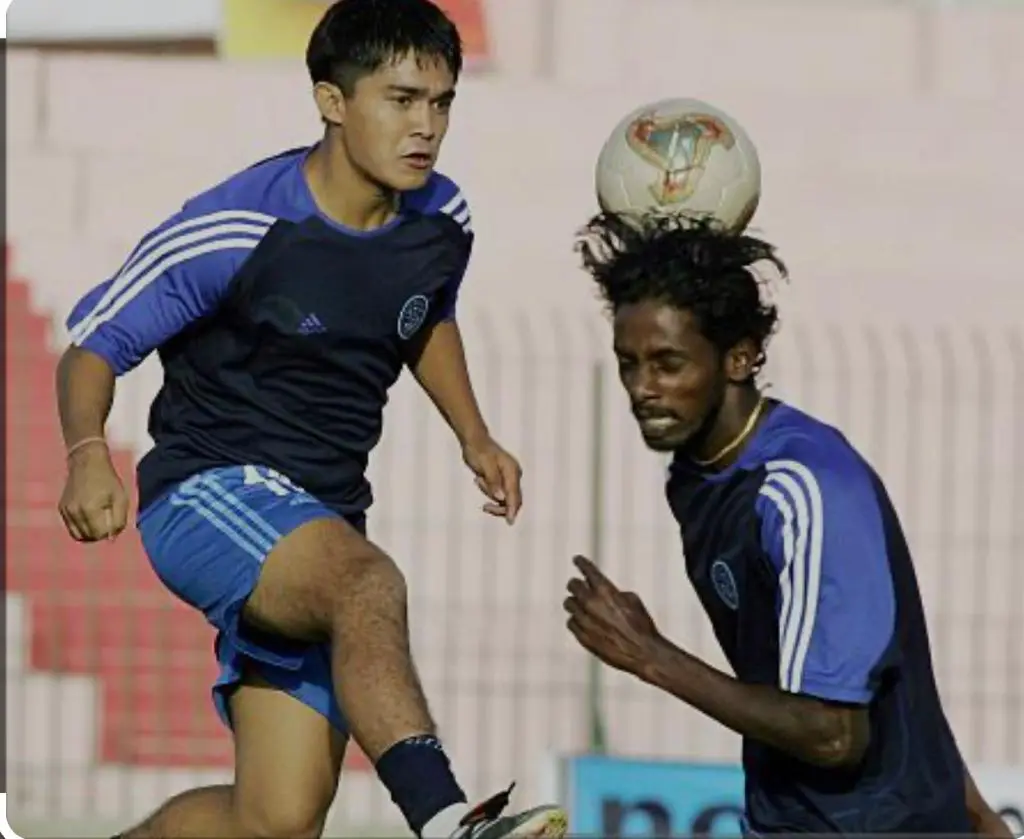
Sunil Chhetri also made his debut around that time he debuted alongside me. Watching him helped me understand what it truly takes to play for the national team. You have to be at 100% every single day. I remember how he trained and worked; in every session, he was the first one there, leading by example. Looking back now, I fully understand what it means to represent the national team.
Yes, coaching has changed a lot. Earlier, the way we were trained was very different. Today, there is so much knowledge available at your fingertips. You can learn so much through courses and through the resources available around you.
Two people, in particular, have changed my entire approach to coaching. The first is a close friend of mine from Goa. We played together at clubs, spent most of our years in the same teams, and even stayed together in the SAI Hostel. We completed our C License together, our B License together, and began our A License together, though I had to step back for a while due to illness and completed it later. Even during the Pro License, I completed two modules with the second batch in India, and he was there as well.
He was the first person who changed my perspective on coaching and on how to train players. That is Caetano Pinho from Goa, someone with immense knowledge. We are very close, and we talk almost every day about our teams and our work.
The second person is Raymond Verheijen, who completely transformed the way I understand football. He made me realise what football truly is, and his philosophy has made things much clearer and easier for me as a coach.
3) India has qualified for the AFC U-17 Asian Cup under your guidance for four consecutive editions (including the 2020 one that was unfortunately canceled due to COVID). What do you attribute this 100% success rate in qualifiers to scouting, training regimens, or something else?
So what I try to do is apply what I have learned. My training sessions are very close to the game and based on real match situations. Of course, there are principles, and everyone has to work within those principles. That is how I prepare the team.
I also give players the freedom to make mistakes, as long as those mistakes do not come from laziness, poor body language, or a bad attitude. If a mistake comes from genuine effort and from trying to contribute to the team, I do not mind. That is how I have built every batch, always trying to get as close as possible to success, because that is ultimately what we can work towards getting as close to success as possible.
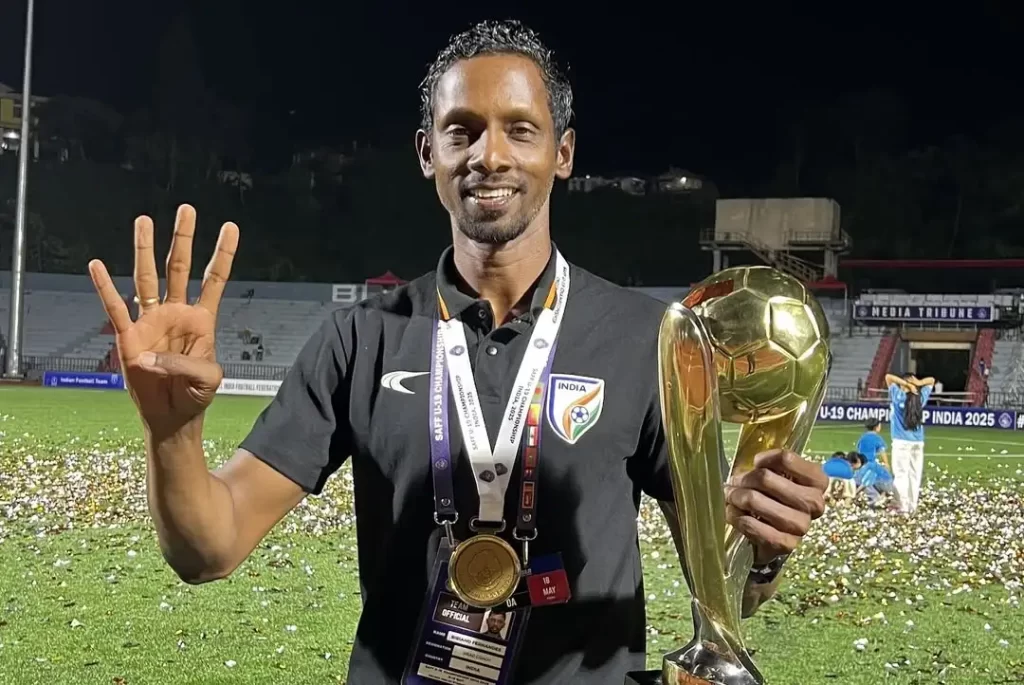
4) The recent qualifiers were a rollercoaster, culminating in that dramatic win over Iran that sealed qualification. Walk us through your mindset going into that match, especially after the earlier 2-0 loss and what tactical adjustments turned the tide?
Actually, the preparation for the Iran match started during the Lebanon match itself. Before we even started the game against Lebanon, while we were warming up, we came to know the situation. Iran had just finished their match before ours, and my staff, Prajwal and the others came and informed me during the warm-up about the scenario. They told me that regardless of what happened in the Lebanon match, we would need to beat Iran. The only exception was if we beat Lebanon 6–0, in which case a draw against Iran would be enough. Scoring 6–0 against Lebanon was extremely difficult, so I immediately began planning how to keep my players fresh for the Iran match.
So during the Lebanon game, after the first half, I substituted the key players, Gunleiba and Gangte, our captain, and rested them. Then, five or ten minutes into the second half, I made three more substitutions. In total, I managed to rest five players as much as possible for the Iran game. That is how we began preparing.
There was only one day of rest between the Lebanon and Iran matches, so we tried our best to get the boys fresh by doing everything possible outside of the match itself. The key was to have the players as fresh as possible, because Iran were playing their fourth match back-to-back, while we were playing our third back-to-back. After our first match, we had a three-day gap, and then only one-day gaps between the remaining matches. Iran, on the other hand, had only one-day gaps throughout all four of their matches. That gave us a slight advantage.
This was the main reason we rested most of our players during the Lebanon match. We were not overly concerned about the Lebanon result; our focus was completely on the Iran match and on trying to get a win against them. That is what we aimed for. And of course, it does not guarantee success, but all we can do is increase the chances of success.
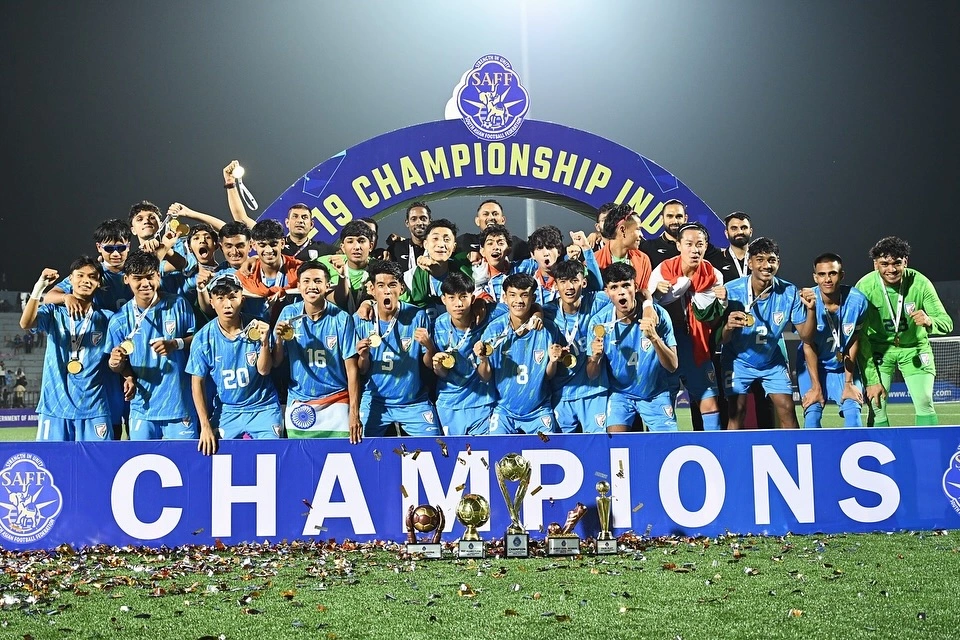
5) Knocking out a powerhouse like Iran is no small feat. What were the biggest challenges in preparing this young squad to compete against such experienced opposition, and how did you instil that belief in them?
Yes, we aimed to get the players as fresh as possible. That was the only thing we could really control between the Lebanon and Iran matches. First, we focused on recovery. Second, we focused on building belief, making the boys understand that we were good enough and that we could win if we played to our strengths, played the way we had trained, and trusted our game model. We reminded them that we would definitely create chances, and when those moments came, we had to be ready. There was no room for any lapse in focus. That is what we worked on.
From the motivation side, our staff, Prajwal, our analyst, and Piyush, took a brilliant initiative. They secretly contacted the parents of each player, without the boys knowing, and asked them to send a short video with their best wishes. Most parents responded within that one day. Along with that, we also received video messages from Khalid sir, Rahul Bheke, Lallianzuala Chhangte, Sandesh Jhingan, Renedy Singh, and even Musa sir.
Prajwal and Piyush worked overnight to compile all these messages into one video. Just before we left the hotel for the stadium, we showed it to the boys. I think that was one of the key reasons they went out there and gave everything. It really motivated them and helped them get the job done.
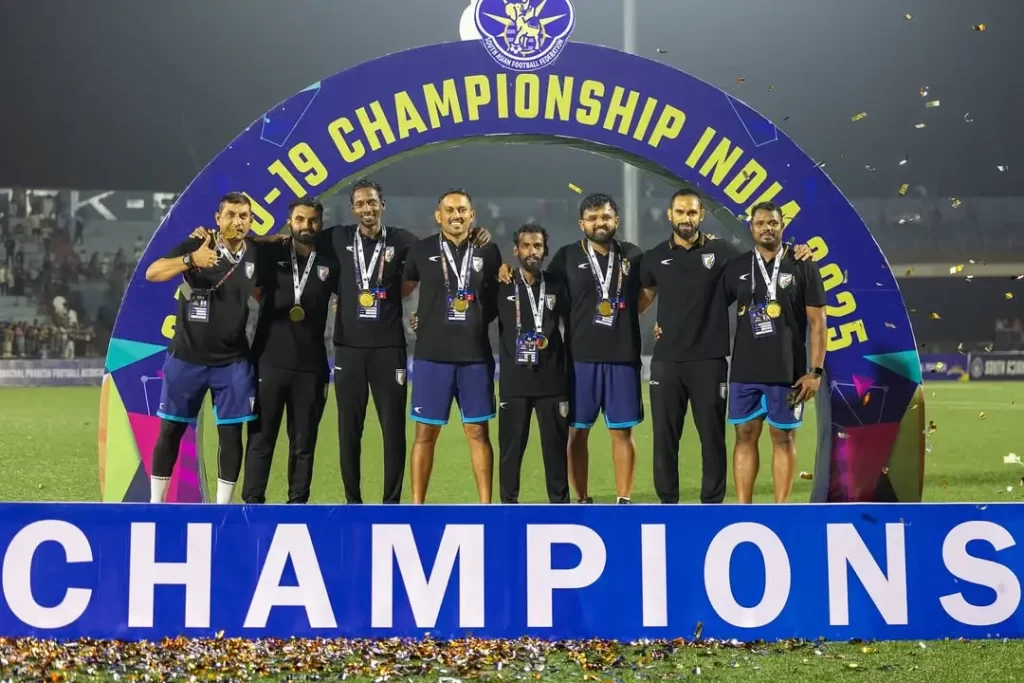
6) From your perspective, who were the standout performers in these qualifiers, and how do their individual growth stories reflect the broader progress of Indian youth football?
Yes, there were many standout performers, not just the goal scorers. I felt the defenders, even though they did not score, were outstanding. The way they defended was amazing to see. Our goalkeeper, Rajrup Sarkar, was excellent as well. Of course, the attacking players also did very well—Gunleiba Wangkheirakpam, Dallalmuon Gangte, and others. These boys consistently gave their best in every match.
Our aim in each game was to give 100% and leave nothing behind. At the end of the day, regardless of the result, we wanted every player to feel that they had given their all and could be proud of their effort.
I believe several players have a bright future: Gunleiba, Gangte, Shubham Poonia, Rajrup, Md Aimaan Bin, Jwala, Danny, and others. They have real potential. But ultimately, it will depend on the pathway they choose and whether they make wise decisions before signing with any club.
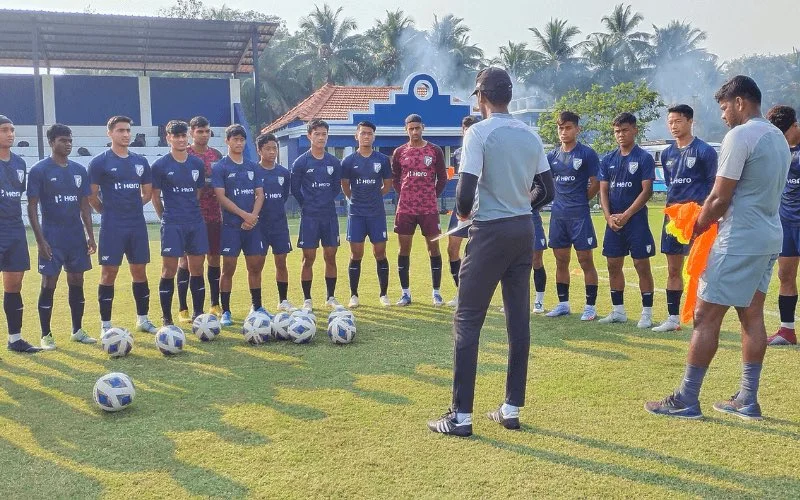
7) Your teams are known for high-pressing, fluid playstyles that punch above their weight. What’s the core philosophy behind this approach, and how do you balance aggressive tactics with the long-term development of technically skilled players?
Yes, I believe in the basics, both with the ball and without the ball. I emphasise rules, responsibilities, and principles. I coach principles, not situations. For example, when we have the ball, what are the principles? And when the opponent has the ball, what are the principles? Once these principles are clear, the players can make decisions according to the situation and fulfil their responsibilities.
As I mentioned earlier, I do a lot of match-related training. My training is only match-related. I do not do anything outside of that. Whatever happens in the match, especially situations where we struggle, I bring those moments into training and work on them.
I also focus on individual development how each player can contribute better in attack and how they can be stronger defensively. My job is to improve how they contribute to the attack through passing, receiving, awareness, scanning, and how they defend through decision-making, knowing when to tackle, when to hold, and understanding what exactly they are defending. These are all basic principles.
My coaching is built on principles. I do not coach situations, because there can be millions of different situations in a game. If we try to coach situations, we will never finish. But if we work on principles, attacking principles and defending principles, it becomes easier. Players understand their roles and responsibilities, and they contribute effectively in their positions.
So yes, this is how I train. And the most important part of my methodology is match-related training.
8) Indian football often grapples with infrastructure and talent pipeline issues. As someone who’s revolutionised youth setups, what systemic changes would you advocate for to sustain this momentum at the grassroots level?
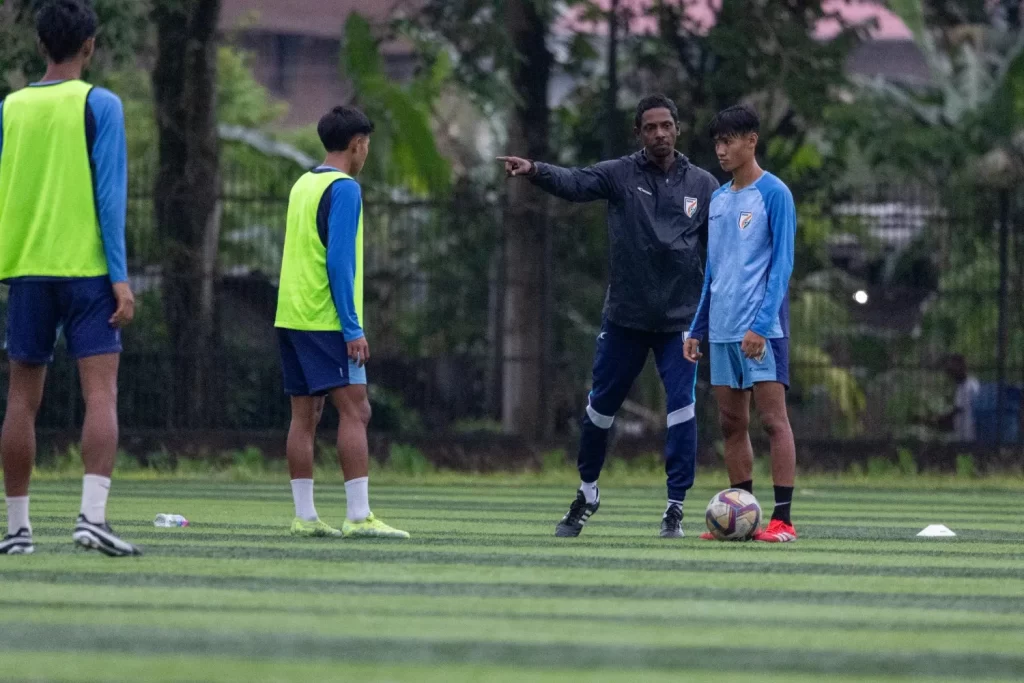
The best way to develop talent is to give children more games. From ages 6 to 12, at the grassroots level, we should allow them to play as many matches as possible, preferably small-sided games. It should start at age six with 4v4, then gradually move to 6v6, 7v7, 8v8, 9v9, and by age twelve, 10v10. The idea is simple: more games, more playing time, more football.
If we can start proper youth leagues across India and ensure that children play 30 to 40 competitive matches every year, the impact will be huge. Imagine a six-year-old who plays regularly at age 6, then again at age 7, at age 8, and so on every year, getting 30 to 40 games. Inside the field, we must try to win because football naturally demands competitiveness. When you try to win, you push yourself, you push your boundaries, you step out of your comfort zone. But once the game is over, the result does not matter at that age. What matters is the experience.
Now imagine that same boy, who has played 30–40 games every year from age 6 to 12. By the time he is 13 and starts playing 11v11, he will have already gone through so many match situations. He will be ready to progress further. And by the time he is 15 or 16, we will have far better players prepared for the Under-17 qualifiers and the Under-17 World Cup. That is how countries around the world consistently qualify for youth World Cups. It is very simple; we can just copy-paste this model.
Infrastructure is not the main issue. A small ground is enough for six- or seven-year-old children. Even the number of officials is not a big barrier. I have seen in Spain that one referee manages the entire 7-a-side match, acting as the main referee, assistant referee, and even handling substitutions. Many countries do not have extensive infrastructure or large numbers of officials, yet they still manage to organise hundreds of youth matches every year. If we follow the same model, everything will change for Indian football.
9) You’ve mentioned in past interviews that Indian men’s football needed a “ray of hope.” With these U-17 successes, do you feel that hope is materializing, and what role do you see your teams playing in inspiring the senior national side?
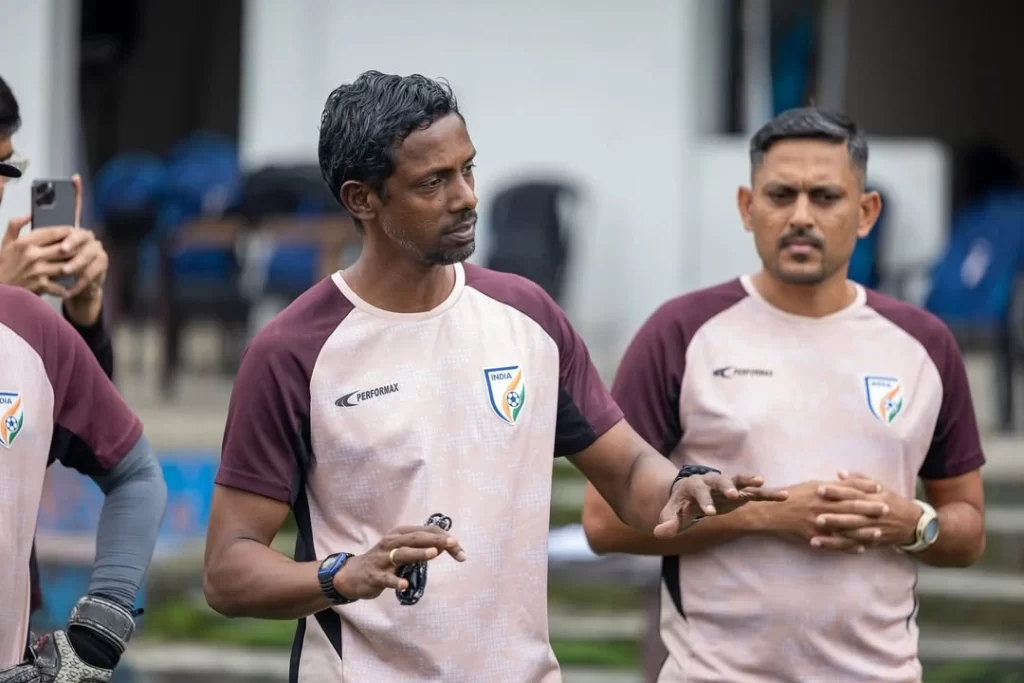
Yes, the Under-17 team has qualified for the AFC U-17 Asian Cup Round of 16, but I feel that is not enough. We need to qualify for the World Cup regularly. That is the only way we will develop world-class players. Eventually, we should also aim to qualify for the Under-20 World Cup and the Under-23 competitions. That is how we can build a future where these players go on to help us qualify for the FIFA World Cup.
To achieve that, we need to develop world-class players, and without regularly playing in the Under-17 and Under-20 World Cups, or even the Under-23 qualifiers, we cannot expect to produce players of that level. So we must play in these youth World Cups consistently.
As I mentioned earlier, the foundation must start at the grassroots. Children from ages six to twelve should be playing a lot of matches—starting with 4v4, then 6v6, 8v8, and eventually moving to 11v11. If players across the entire country consistently get these kinds of match experiences from a young age, imagine how they will develop. From that large pool, the best cream will rise, and those will be the players capable of taking India forward.
10) Looking ahead to the AFC U-17 Asian Cup proper, what are your realistic targets? And how do you plan to bridge the gap between U-17 success and pathways to the senior team or professional leagues?
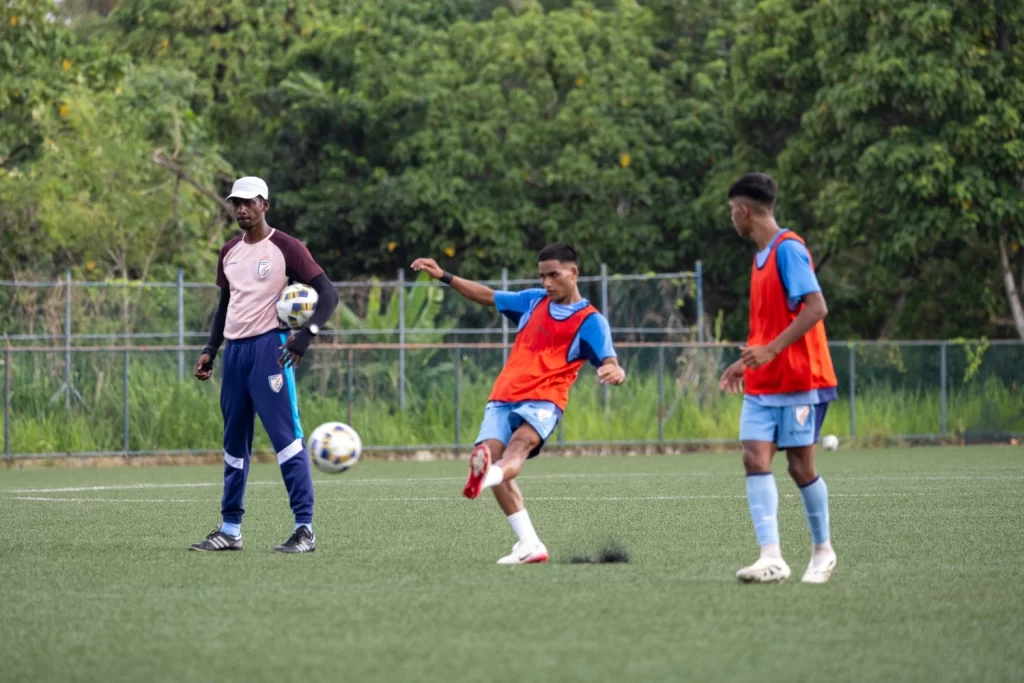
Right now, we have to focus on our work and on raising the level of this team. That is our priority. We are going to play more exposure matches and gradually compete against teams at the level of Australia, Korea, Japan, Tajikistan, and others. The idea is to bring ourselves closer to their standard before going into the Asia Cup. That will be our preparation pathway.
The target, of course, is to qualify for the World Cup. But we will take it one match at a time first match, second match, third match, and so on. We are waiting for the draw in February, but our preparation will start immediately. We will begin with scouting again, conduct trials, and then bring back the core group of 23 players who played in the qualifiers. From there, we will train together and finalise the squad.
Several countries have already approached us to play friendly matches as part of their preparation. So we are working on those arrangements as well. We are preparing, and the ultimate goal remains the same: to qualify for the World Cup.