

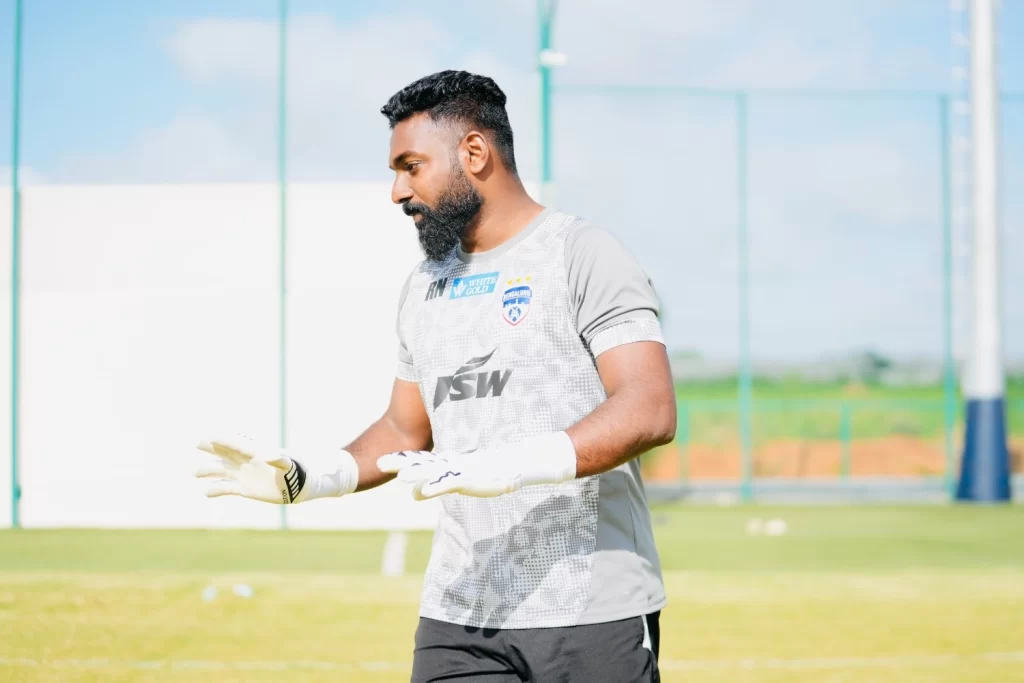
BFC have entrusted 30-year-old Rashid Nalakath with running their No.1s – a landmark for Indian goalkeeping coaches. From Areekode to the BFC inner circle, he now oversees the craft of keeping Gurpreet Singh Sandhu fresh while pushing the next generation to climb.
BFC ‘s call came first. Then a voice note: “Now it’s time.” It was from Gurpreet, and it told Rashid everything he needed to know. For the first time in the club’s history, a Malayali coach had been handed the reins of BFC’s first-team goalkeeping department. Rashid wasn’t just breaking ground; he was redrawing the pathway from Soccer Schools and Bellary’s academy pitches to the hottest seat in the dressing room.
In this Q&A, Rashid traces the route from FC Areekode to the ISL spotlight, explains how he balances Gurpreet’s readiness with youth development, and outlines why a goalkeeper coach must be as fit and as accurate as the players he serves.
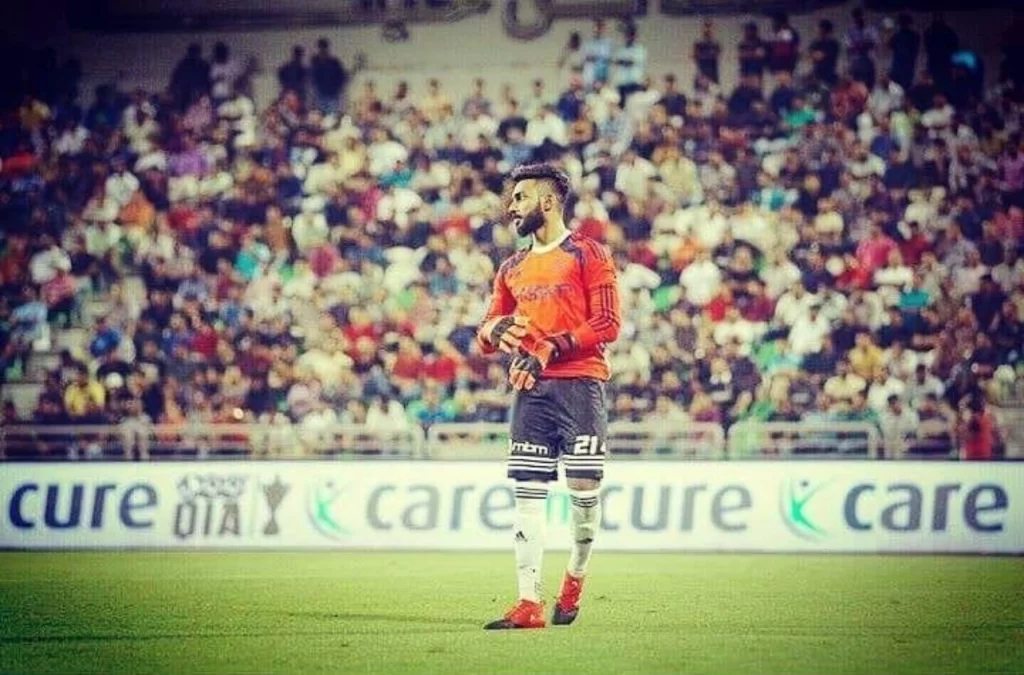
1) Could you share the journey that led to your recent appointment as first-team goalkeeping coach at BFC, and what changed in responsibility compared to your prior role in the academy?
After a hand injury, I stepped away from professional football. I spent two years as goalkeeping coach at FC Areekode in the Kerala Premier League. That stint kept me close to the game and to coaching.
Soon after, Suhel Nair, through Noushad Musa, invited me to BFC Soccer Schools. he trusted me again and moved me to the U-13 and U-15 residential academy in Bellary. There were several senior coaches in the system then. Stepping up despite that competition made me take coaching seriously for the first time. Suhel has been a major influence on my journey.
I then received strong backing from Jan van Loon, BFC’s Head of Youth. Within a year, I became Head Goalkeeping Coach of the Reserve Team and Head of the Academy Goalkeeping Department. With the reserves, I learned a great deal from Bibiano Fernandes. In parallel, I assisted the first team as an assistant GK coach, learning from Kote, a Georgian goalkeeping coach.
At the start of my third year, I was promoted to Head Goalkeeping Coach of the first team. It was a surprise and a huge responsibility. This was the first time BFC had trusted an Indian goalkeeping coach to lead the first-team department. The season I had already spent around the first team proved invaluable. I’m grateful to Director of Football Darran Caldeira for his decisions and belief, and to Head Coach Gerard Saragossa and a very collaborative staff for daily support.
In terms of responsibilities, the mindset hasn’t changed. We treat the reserves and the first team with the same seriousness. The difference is in the stakes. At first-team level, we work every day to win. The margin for error is smaller. The scrutiny is higher. Consistency is non-negotiable. The core principles remain the same.
I’ve had three close friends Farshad, Prakashan, and Suhail who have been with me since I was 14. From the very beginning, they were the ones who stood by me during every crisis, consistently motivating me and offering help whenever things became difficult.
Although all of them come from humble backgrounds and work as daily-wage labourers, they still supported me in ways that went far beyond what anyone could expect. For instance, at an age when most teenagers are focused only on themselves, they stepped in to help me financially whenever I needed it. In fact, I vividly remember how one of them, who worked as a painter, used his limited earnings to buy me football boots so I could continue playing.
Because of gestures like these, a significant part of who I am today is shaped by their presence. Even now, despite the challenges they face, they remain by my side, and that continued support means everything to me
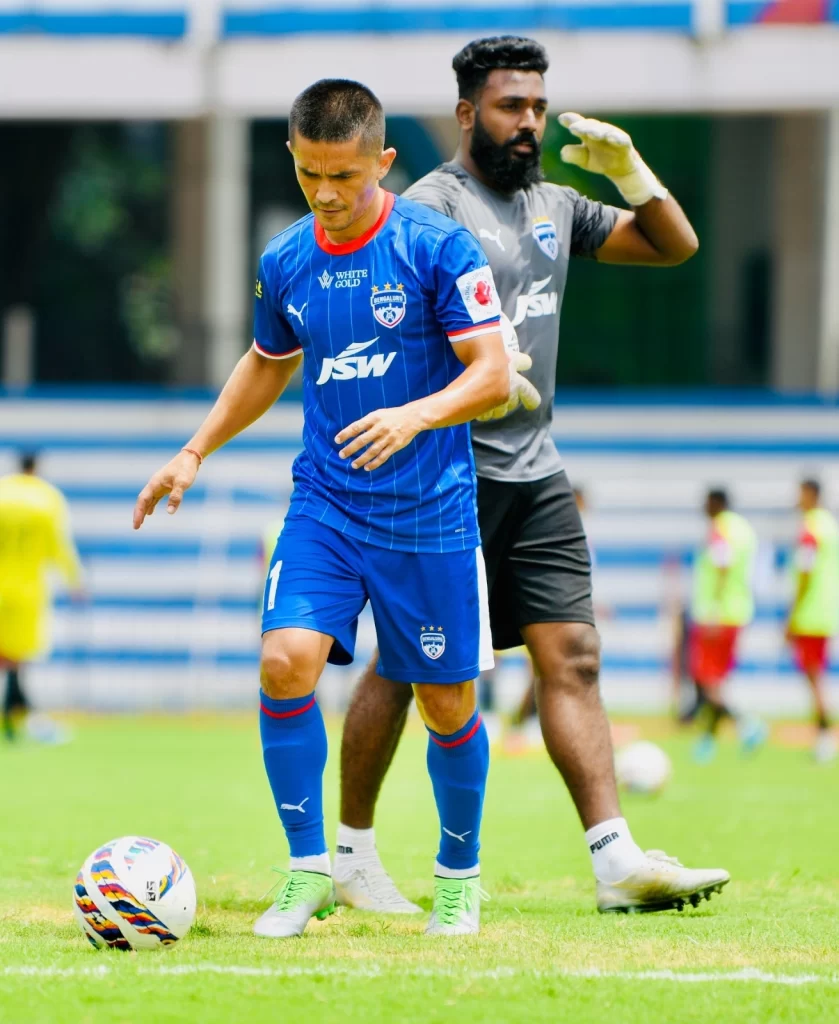
2) In transitioning from youth setups to the senior squad, what have been the greatest challenges and the most rewarding adjustments in your coaching approach?
The hardest part is sustaining elite standards across a long season. We must keep top goalkeepers fit, technically sharp, and mentally resilient while minimizing injury risk. At senior level, every choice on session design, load, recovery, and review links directly to results. The margin for error is tiny.
The reward is adapting academy processes to a results-first environment without losing our development DNA. We see keepers stay sharp week after week and turn training detail into match consistency. The reserve-team aim promote at least one goalkeeper each year and feed U-20/U-23 now complements the first-team culture. The standards we set hold under pressure.
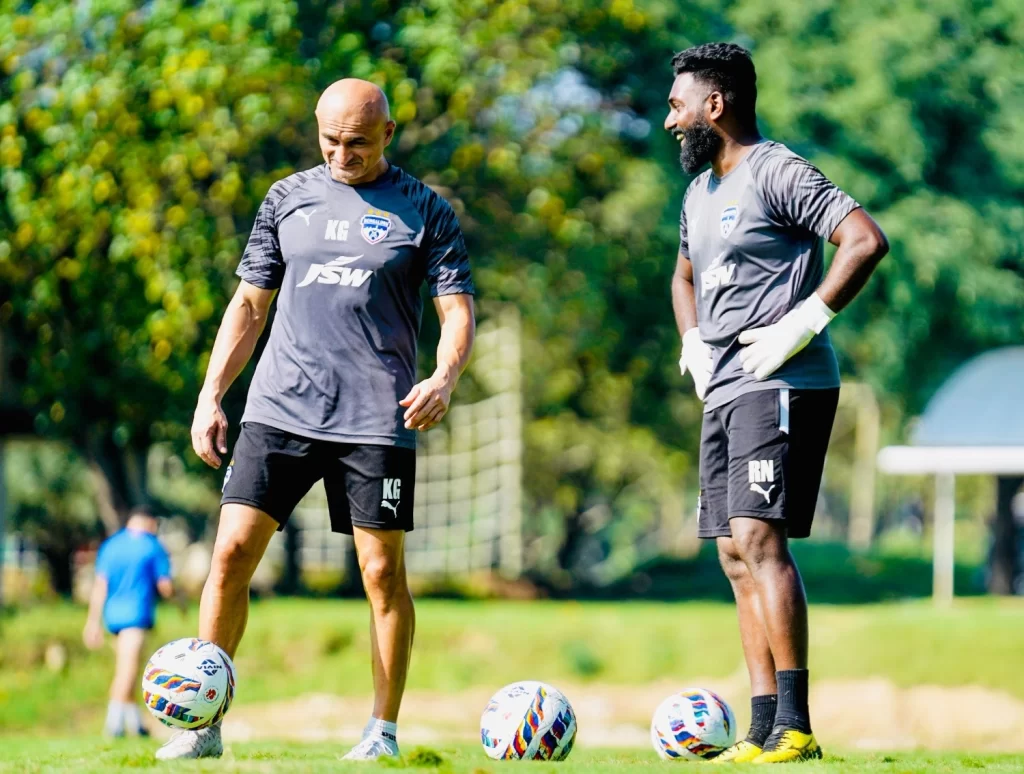
3) Working with an experienced keeper like Gurpreet Singh Sandhu alongside younger goalkeepers, how do you balance individualized development with collective cohesion?
I’m fortunate to work with a top-class goalkeeping unit in BFC. Gurpreet Singh Sandhu anchors it as the senior India international. Sahil Poonia is India’s U-23 first-choice. Aheibam Suraj Singh is the U-20 first-choice. We also have the experienced Lalthuammawia Ralte, plus Jaspreet Singh, who is returning from surgery.
The balance starts with a two-lane plan. My first job is to keep the first-choice goalkeeper fresh and fully prepared for the next fixture. The second choice must be match-ready at all times. In parallel, I dial up the load for the younger keepers and for Jaspreet as his rehab progresses pushing development without compromising recovery.
Working with Gurpreet is a privilege. Even before my promotion we had a strong connection from my time assisting the first team. When I stepped up, he sent a voice note that removed any doubt and set the tone for our collaboration. Since then, it’s been daily communication match analysis, micro-adjustments to session design, and check-ins even during national duty. The goal is simple: give him exactly what he needs tactically, as per the head coach’s plan.
Across the group, man-management is everything. We modulate by age and profile. We follow a structured matchday-minus loading pattern (M-4 through M-1) and prioritize freshness on matchday. That philosophy refined under coaches like Bibiano Fernandes lets us individualize development while keeping the collective rhythm tight. Seniors stay sharp. Youngsters keep climbing. The unit stays consistent, confident, and injury-free.
“Man-management is non-negotiable; no one feels left out.”
4) Goalkeeping is both physical and psychological. How do you integrate mindset, communication, and leadership skills into your sessions and day-to-day coaching?
The reality of the position comes first. A goalkeeper can make ten top saves and still be judged by one mistake. So, our work is as much mindset as mechanics. I keep the group small and connected usually four to five keepers. One younger keeper train daily with the first team but plays B-team matches for minutes. Everyone has clear, written targets. U20/U23 keepers know the fixtures they must hit. The first choice and the next two have appearance and performance goals. Those targets create focus. Constant 1:1 check-in how they feel, what they need, where confidence sits keep the fight in them. Man-management is non-negotiable. No one feels left out. Rehab plans are broken into short wins to rebuild belief.
Communication and leadership are built into the weekly micro-cycle.
M-4 (Speed & Movement): reset after recovery; footwork, body shape, and calling triggers — loud, early, clear.
M-3 (Speed & Power Reaction): add load and decisions under fatigue; the senior leads organisation cues; youngsters must “own” their box vocally.
M-2 (Game Preparation): opponent-specific patterns; if we expect early crosses or long throws, we script them; assign clear tasks — who commands near post, who sets the line, who triggers transition. Leadership becomes habit, not hope.
M-1 (Feel-Good): individual confidence work; some prefer aerial reps, others quick reactions or distribution rhythms; we finish with short, positive debriefs so they enter matchday fresh and quiet in the head.
Seniors mentor juniors during drills. Juniors brief seniors on set-piece roles to build ownership both ways. The outcome is simple: a unit that is technically sharp, emotionally steady, and tactically vocal keepers who reach matchday clear in the head, light in the legs, and ready to lead.
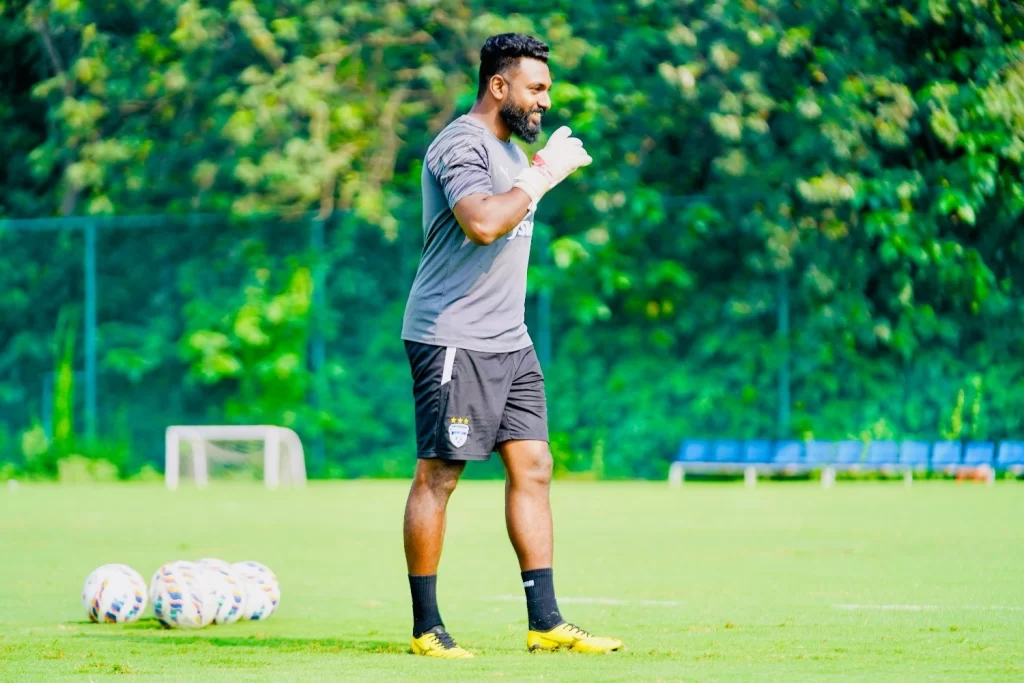
5) In a congested fixture calendar, how do you manage load, recovery, and injury prevention uniquely for goalkeepers?
Recovery leads the way in a tight schedule. We start by mapping individual profiles age, muscle history, and typical bounce-back time. The next day’s plan reflects reality, not a template. The starter’s load tapers so he arrives fresh. Non-starters work a little harder, with occasional top-up sessions, to stay close to a 90-minute level. Injury prevention stays front and centre. Once the XI is set, keeping the No.1 healthy is a daily objective.
We use RPE after every session to steer the week (in-season targets):
- M-4: ~6
- M-3: ~6–7 (never above 8)
- M-2: ~4–5
- M-1: ~3–4
If the first 24–48 hours post-match show fatigue or any red flags, we dial M-2 and M-1 down towards recovery and confidence work. The balance is simple to say and hard to execute: keep the starter fresh, keep the next man ready, and land the week with clear heads and light legs. Over a long season, finishing without injuries is the true benchmark for a goalkeeping coach.
“If I can’t deliver properly, I won’t continue as a GK coach.”
6) How has your own coaching philosophy evolved over time perhaps through mentors, educational certifications, or experiences abroad and which influence has shaped you most?
BFC is where I truly became a goalkeeping coach. The environment is richer than it looks from the outside. The club invests in a clear pathway from Soccer Schools to the U-13/U-15 academy in Bellary, then the reserves, and finally the first team. That continuity shaped my philosophy. Development standards don’t change with the badge; only the stakes do.
Early on, I learned alongside Jan van Loon, a foreign coach. I also worked under Jason Bright, then Head of Youth. That exposure sharpened my session design, detail, and discipline. In the reserves, Bibiano Fernandes influenced my man-management and role clarity. With the first team, Kote our Georgian GK coach taught me to turn academy processes into elite, results-driven routines. Beyond BFC, Renedy Singh helped me see the position inside the larger tactical picture.
The biggest outside influence has been John Achterberg. He’s Liverpool’s long-time GK coach, now at Ettifaq. His advice on philosophy, age-specific work, and the M-4 to M-1 match cycle has guided me. For career judgement, I lean on Suhel Nair, now with NorthEast United’s academy. His counsel keeps me aligned with long-term growth.
I even turned down offers last year to finish my learning cycle at BFC. When the club handed me the first-team role this year, it felt earned. If I must name the defining force behind my evolution, it’s BFC’s structure amplified by mentors like Achterberg and anchored by colleagues who demanded high standards every day.
7) Finally, looking back on your trajectory so far, what advice would you give to aspiring goalkeeping coaches in India aiming to work at the highest levels?
Start with the craft of delivery the quality, repeatability and realism of every serve you give a goalkeeper. Most of a keeper’s touches in training come from the coach, not from strikers, so if your delivery doesn’t mirror how a forward actually strikes the ball pace, angle, dip, deception you’re preparing them for a game that doesn’t exist. Study finishing technique, hit those balls yourself, and make your serves identical across all keepers so the stimulus is consistent. That demands fitness and discipline: a GK coach has to be physically able to deliver at high quality, day after day. I’m strict about this if the day comes when I can’t deliver properly, I won’t continue as a goalkeeping coach. Tactics you can organize with your voice; technique you must demonstrate with your body.
Be realistic and relentless. Build sessions that replicate match pictures, not highlight reels. Track recovery, respect bodies, and chase marginal gains in footwork, handling, distribution and decision speed. Learn from specialist’s watch, ask, and steal good ideas. I’ve seen what elite precision looks like from senior coaches (including our Georgian coach, Kote) well into their 50s; their standard is the benchmark. And finally, invest in your own athleticism: strength work, mobility, repetition. The longer you can sustain top-class delivery, the more value you give your keepers and the game.
8) Feroz Sherif’s work with the Indian national team has been influential for goalkeeping in the country. Has his approach inspired you in any way, and how do you see your own appointment contributing to the broader ecosystem of Indian goalkeeping coaches?
I don’t know Feroz Sherif sir personally yet, but I hope to meet him soon. When the national camp was in town, training was closed to outsiders, so I missed that chance. Even so, I’ve heard a lot about his work during my time at Pune FC. In fact, I often heard about him from Anas Edathodika, and even now, when Gurpreet Singh Sandhu returns from national duty, his name comes up again. Overall, seeing Indian coaches—and specifically Indian goalkeeping coaches—earn national-team roles is genuinely inspiring. Ultimately, it reminds all of us that the door is open as long as we meet the standard.
My philosophy on “ecosystem impact” is simple: knowledge plus delivery. Licences, podcasts and online learning help, but for goalkeeper coaches the non-negotiable is consistent, realistic ball delivery. In senior sessions, one coach might strike 90–100 balls a day; unless you can reproduce game-speed serves, your knowledge won’t translate for the keeper. That’s the standard I try to follow, and it’s the same message I pass on to the younger coaches who come to observe or intern with me. Over the years, I’ve been able to guide a few coaches from Kerala towards opportunities in soccer schools and academies, and many of my peers from the licence batches are progressing well across India. When we keep exchanging ideas and stay sharp in our on-field delivery, the overall level naturally improves.
Clubs are already trusting more Indian GK coaches. I believe BFC backing me as first-team goalkeeping coach is part of that shift; other ISL clubs (FC Goa, Chennaiyin FC and more) now have strong Indian voices in the position too. Inside the club, the alignment from academy to first team means our impact naturally touches the national pathway: today, BFC goalkeepers are present across the senior, U-23 (Sahil Poonia) and U-20 (Aheibam Suraj Singh) teams. For me, that’s the best contribution produce keepers who are ready for India.
Going forward, my role is to keep standards high, work with trust and professionalism under the head coach, and make sure success doesn’t stop with me. If we perform, foreign and Indian head coaches alike will continue to place faith in Indian GK coaches. That creates a virtuous cycle: more opportunities, better mentoring, and a deeper bench of Indian specialists who can serve both club and country.








Proud of you Rashid.. Long way to go
Nice article 💯. Do cover other unsung heroes of Indian football.
All tge best future Indian GK coach 👏👏👏with love Umesh kannur 💛⚽