On evenings across Kerala, from Kannur to Thrissur and from Kochi to Thiruvananthapuram, drums rolled and voices rose in one steady rhythm. This Super League Kerala analysis shows how a state rediscovered its old football heart. Super League Kerala did more than stage matches. It gathered players, families and local communities into one living tapestry. Under fresh floodlights and sometimes in monsoon rain, elders in club scarves stood beside youngsters learning the chants, women and children claimed their own space in the stands, and young volunteers learned the craft of running a game. The league arrived with ambition. It held its shape with clear rules and daily work. Now it is beginning to move the needle where it matters most, in how people come together, in the chances offered to the young, and in the belief that Kerala football can grow again with pride and purpose.
What the League is and Why it Matters
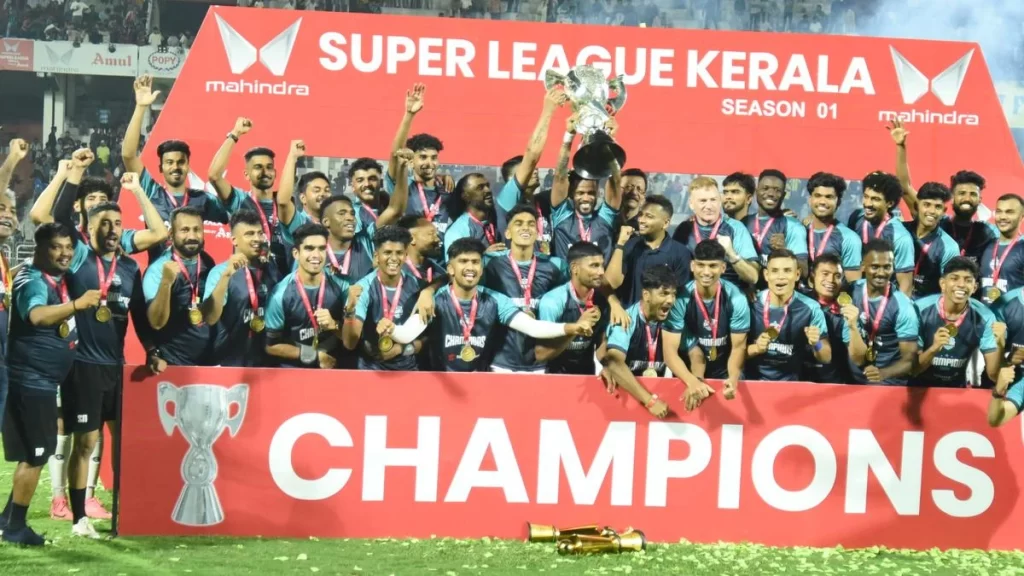
Super League Kerala is a professional franchise competition launched in 2024 by the Kerala Football Association with Scoreline Sports Private Limited. Six clubs play a home and away league stage before the top four advance to the playoffs. The league sits outside the national pyramid, yet it has a clear purpose. It gives Kerala talent a professional stage and offers investors and administrators a framework that can grow.
Season two opened in October 2025 with six franchises. The squads list around 210 players. There are about 36 foreign players. That is a share of a little over 17 percent. The rules for age group talent are strict. A team must carry at least five U23 players. Four must be in the matchday squad and two must start. These are not token lines; they are pathways.
Economic Impact that People can Feel
A successful tournament leaves money in local hands, and Super League Kerala already does that in visible ways.
Tourism has ticked up around matchdays as supporters travel across districts. Hotels record fuller weekends. Local eateries and transport services see steady demand. Outside the turnstiles, jersey sellers and merchandise stalls move stock. Digital creators monetise highlights, interviews and explainers, which keeps the league in circulation between games.
The jobs picture is wider than the pitch. There are more than two hundred footballers under contract across the six teams. Each club employs around fifteen to twenty-five other staff across coaching, ground care, operations and media. League operations add roughly thirty-five roles that cover scheduling, broadcast coordination, medical support, event control and in-venue entertainment. On matchdays this core workforce expands further with music bands, cultural troupes and other performers, along with short shift workers from transport, printing, photography and sound. Even supporters’ groups attract backers for banners, logistics and travel.
When money moves through so many touchpoints across the season, it stays in the neighbourhood and keeps circulating. That is when a league begins to feel like an industry rather than a standalone spectacle.
Infrastructural Gains Across the Map
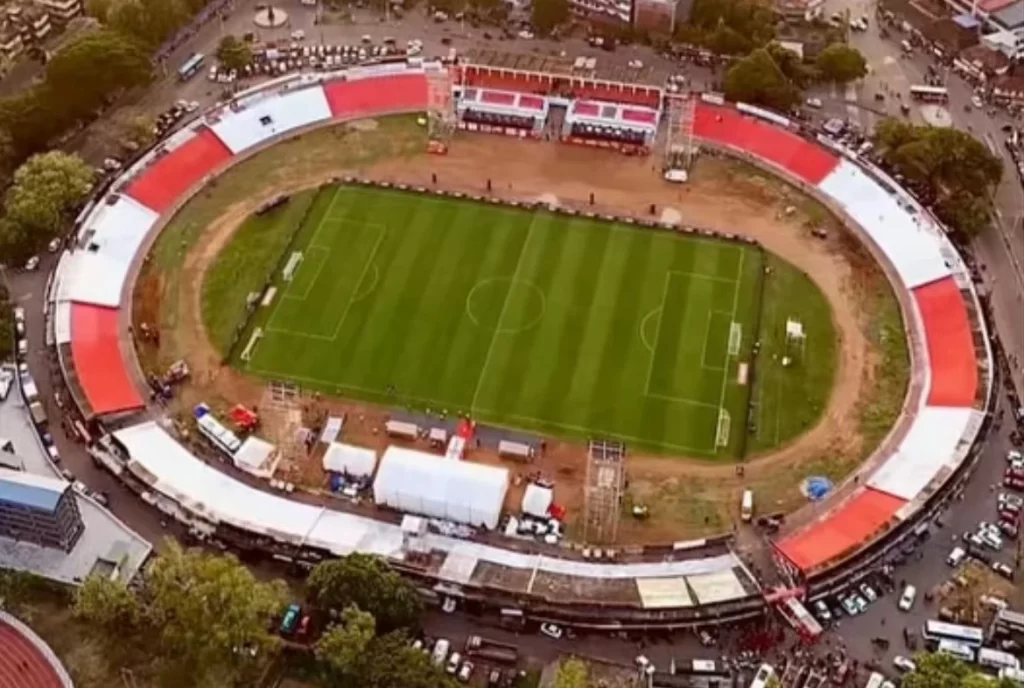
The season one footprint covered four venues: EMS Corporation Stadium in Kozhikode, Payyanad Stadium in Malappuram, Jawaharlal Nehru Stadium in Kochi and Chandrasekharan Nair Stadium in Thiruvananthapuram. The new season steps up to six. Forca Kochi have shifted their home to Maharaja’s College Stadium, while Thrissur Corporation Stadium is returning to regular use and Kannur Jawahar Municipal Stadium has been renewed. Maharaja’s College Stadium, once quiet outside state events, is now active with Super League Kerala matches.
This matters because stadiums thrive only when they stay active. As grounds remain in circulation, support services cluster around them. Gyms and hotels see steadier bookings, eateries and vendors plan for match traffic, and transport providers adjust routes to serve evening crowds. When usage is predictable, maintenance settles into a rhythm with the pitch prepared on time, the lights tested and safety checks becoming routine. Just as important, standard venues give players and coaches consistent conditions to develop, be scouted and benchmark progress, which in turn helps local talent grow and use these facilities with purpose. In simple terms, activity invites care, and care creates value. By any fair reading, the league is already close to full marks on infrastructure momentum.
Social Capital and Fan Culture
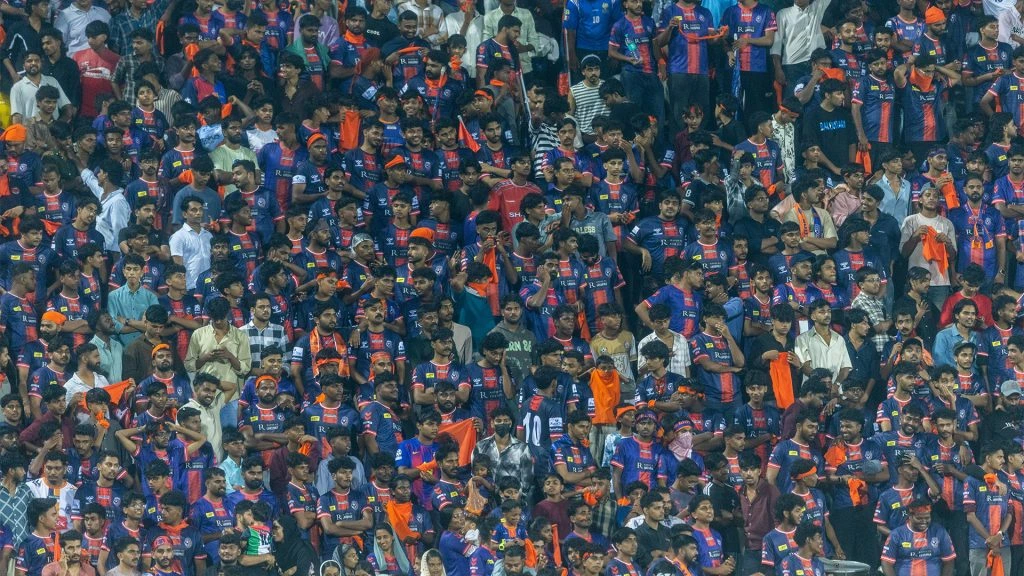
Kerala’s football crowds are not passive. They organise, they cheer, they chant and they travel. Super League Kerala has harnessed this energy with structure. Supporters’ groups are active for every club. Ultras Malappuram for Malappuram FC, Beacons Brigade for Calicut FC, Forca Cruz for Forca Kochi, Red Mariners for Kannur Warriors FC, Blue Gadies for Thrissur Magic FC and South Coast Troopers for Thiruvananthapuram Kombans FC.
These communities run choreographies, hold meetups and set matchday norms. They welcome families as well. That changes the matchday profile and builds a culture that can last.
The digital footprint tells the same story. The league account has about two lakh followers on Instagram and about one lakh on Facebook. Malappuram FC, which is striking for a district side that is only two years old, alone is at a little over two lakh on Instagram, more than some clubs in the ISL and the I League.
Star power has added to the surge. Affection for well-known co-owners and ambassadors has lifted the league’s profile and reach, with Sanju Samson, Prithviraj Sukumaran, Basil Joseph, Asif Ali, Shashi Tharoor and Kunchacko Boban among others drawing new eyes and fresh enthusiasm to the stands.
Youth Development with Structure and Purpose
The age group rules are robust for a reason. Kerala football needs steady game time for young players, and the minimum requirements guarantee that opportunity. Squads already include around thirty U23 players. They train with seniors, start in front of real crowds, and learn under the lights and the lens.
The pathway is already visible. Midfielder Mohammed Arshaf A K, a U23 who featured for Calicut FC in the inaugural season, has been signed by Indian Super League club NorthEast United FC. With more minutes and sharper visibility, similar moves feel realistic for several young players this season as well.
Off the pitch, the league has created roles for young administrators. Operations interns run touchline logistics, and media trainees handle content and post-match notes. The outcome is skill transfer under pressure. The system is beginning to produce professionals who can step into bigger leagues without a learning shock.
A Wider Stage and an International Gaze
The season launch in Dubai sent a clear message. Kerala wants to tell its football story to audiences beyond its borders. Staging the curtain raiser at Al Ahli Sports Hall in Al Nahda put the league before a strong mix of football followers, a broader Indian expatriate crowd and a regional football ecosystem of clubs, agencies, broadcasters and sponsors. Before a ball was kicked in Kerala, Super League Kerala had built momentum with press coverage, partner meetings and brand visibility in a global events hub with deep sports marketing and media networks.
That stage matters for business and for football. Commercial decks now travel with greater credibility because the product has been presented in a professional setting. Conversations with sponsors and partners outside India are easier to start and simpler to close. For players, coaches and agents, the launch widens networks for trials and training opportunities abroad. The attention is earned because the league looks modern, keeps its presentation consistent and tells a story that resonates with both Malayalis overseas and neutral observers.
On Match Nights across Kerala
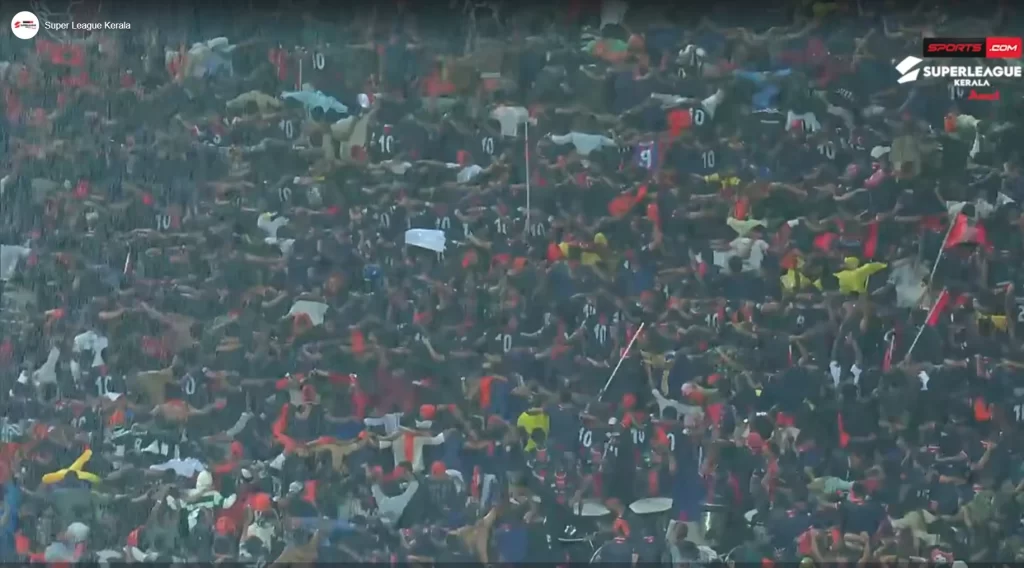
When the big nights come, you can see what this league might become. Local fans arrive early, families in club colours find their rows, and community groups coordinate travel, banners and flags. The football is direct and fast, and the sound in the stands holds even when the rain comes. Bands and MCs set the tempo, event staff and volunteers keep the flow, and vendors work the concourses with a practised rhythm. This is the environment scouts describe in their reports because it tests players in real conditions. It builds resilience, sharpens decision-making and turns a state league fixture into a professional audition. As these habits repeat across venues, the matchday begins to feel less like an occasional showpiece and more like a standard that players and clubs can grow into.
Coming to the stadium on match days has become part of life for many locals. Families attend more because venues are within reach. An evening match at a nearby ground is now a regular outing rather than a rare trip to a distant city. That is how culture takes root.
The Numbers that Frame the Story
Matchday attendance:
- EMS Stadium, Kozhikode (Calicut FC) : 17,851
- Payyanad Stadium, Manjeri (Malappuram FC) : 17,705
- Chandrasekharan Nair Stadium, Thiruvananthapuram (Thiruvananthapuram Kombans FC) : 7,249
- Maharaja’s College Stadium, Kochi ( Forca Kochi FC) : 3,516
- Jawahar Municipal Stadium, Kannur ( Kannur Warriors FC) : data not yet available (insufficient verified entries so far)
- Thrissur Municipal Corporation Stadium (Thrissur Magic FC) : data not yet available
Overall average for the 2025 season (to 10 November): ~12,649 spectators per match.
Attendance data compiled from Transfermarkt.co.in (accessed 10 Nov 2025). Figures for Kannur and Thrissur pending verified entries.
Digital reach:
- League: about two lakh on Instagram, over one lakh on Facebook
- Malappuram FC: around two lakh fourteen thousand on Instagram
- Calicut FC: around one lakh sixteen thousand on Instagram
- Kannur Warriors: around fifty eight thousand nine hundred on Instagram
- Forca Kochi: around fifty seven thousand eight hundred on Instagram
- Thrissur Magic: around twenty thousand six hundred on Instagram
- Thiruvananthapuram Kombans: around twenty six thousand two hundred on Instagram
The Rough Edges that Remain
The season began while renovation at Thrissur Corporation Stadium was ongoing, which pushed Thrissur’s early fixtures away from home and then clustered home matches toward the end. That imbalance affected competitive rhythm and made travel planning harder for players and supporters alike. It was late for Kannur Warriors as well to start their home games, which diluted early-season atmosphere and delayed local engagement. It is also understandable that options are limited in a state where sporting infrastructure is still catching up, but the impact on scheduling was real. In Kannur, the packed opening night underlined safety concerns, with sections of the stand not feeling steady enough to carry the load and supporters expressing unease about basic stability. These are signs of planning and infrastructural readiness falling short before kick-off. Compared to last season, there appears to be a dip in jobs across league operations, which is not ideal for a league that aims to support and nurture talent in coaching, media and event roles.
All of this can be overcome with sharper pre-season planning and firmer venue readiness standards, anchored by clear timelines and public checkpoints. Pair that with basic structural and safety checks before gates open and visible medical cover on match nights, so safety feels assured rather than assumed. Updates need to be timely and proactive. With steady communication and disciplined execution, the rough edges will smooth out and the experience will match the ambition on the pitch.
Making it Local, Then Making it Bigger
Kerala has always loved football. What it lacked was easy access to regular professional matches. SLK closes that gap by bringing games closer to home. When fixtures land in familiar towns, families show up together, habits form, and the league earns patience. That breathing room lets organisers streamline entry and crowd flow, train staff, improve safety and signage, and get the small things right.
Access then fuels ambition. Reliable match operations draw sponsors, consistent venues lift broadcast quality, and the same grounds double as hubs for clinics and training. Scouts watch youngsters in comparable conditions across districts, which clarifies pathways. Access lays the groundwork for improving standards and setting realistic ambitions
The Road Ahead
Super League Kerala has reached the one thing that many regional projects never find. It has found relevance. The model activates venues that once sat idle. It gives youth a runway with guardrails, keeps money circulating in local markets, and grows audiences at home and abroad.
The next step is consolidation: stronger broadcast windows, a calendar aligned with national fixtures, and improved match officiating with better medical cover. If the league keeps this focus, Kerala will not only rediscover its football identity; it will refine it for the next generation.